Romans 14-16

Paul ends his letters to the Romans.  I am amazed at how applicable this is to us today. (I know it is all applicable, but this chapter stood out)

In Rome, many struggled with the food restrictions Moses put before the Hebrews to keep them separate from the Canaanites.  Many were also still commemorating feasts and festivals, while others did not.  They were “adding to grace.”  They did not fully understand the full measure of our freedom in Christ. Remember Romans 11:

And if by grace, it cannot be based on works; if it were, grace would no longer be grace.

As we now live in a world of denominations, we are quick to judge what other believers hold to as a practice.  This is not salvation doctrine, but the traditions, beliefs, and practices others do or not do (because they are Christian, not to be a Christian)

10 You, then, why do you judge your brother or sister? Or why do you treat them with contempt? For we will all stand before God’s judgment seat. 11 It is written:

“‘As surely as I live,’ says the Lord,
‘every knee will bow before me;
    every tongue will acknowledge God.’”

12 So then, each of us will give an account of ourselves to God.


Chapter 15

Paul wraps up how those strong in their faith in Christ should live in a relationship with weaker ones. From Romans 14, we know that Paul equates strong faith with a sense of freedom to participate in things formerly forbidden by the law of Moses or Jewish tradition.

Now, Paul insists that those strong in faith should trust God enough to please others above themselves.   Christ lived both as a servant to the Jews and fulfilling all of God’s promises to them. Those promises included God’s plan to include the Gentiles in His family one day.

Paul ends with ‘his plan’ to visit Rome as he passes through.

23 But now that there is no more place for me to work in these regions, and since I have been longing for many years to visit you, 24 I plan to do so when I go to Spain. I hope to see you while passing through and to have you assist me on my journey thereafter. I have enjoyed your company for a while.

His plan and God’s plan are not the same.

Before he comes there, Paul will stop in Jerusalem (a dangerous task right now for him) and leave an offering to build up the church in Jerusalem.

Seeing Paul’s love for Rome and his desire to go there on good terms breaks my heart.

31 Pray that I may be kept safe from the unbelievers in Judea and that the contribution I take to Jerusalem may be favorably received by the Lord’s people there, 32 so that I may come to you with joy, by God’s will, and in your company be refreshed. 33 The God of peace be with you all. Amen.

Sometimes our prays are not God’s plans.  


Romans 16 is the final passage in Paul’s long letter to the Christians in Rome.

It contains four sections:

  1. his greetings to specific people in Rome,
  2. a quick and urgent warning about the danger of false teachers,
  3. greetings from those who are with him in Corinth
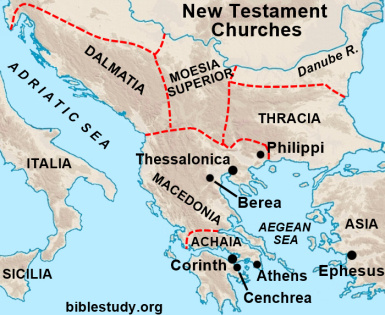
  4. the final hymn of praise to God is called a doxology.Athens, Berea, Cenchrea - New Testament Churches

Phoebe is a servant of the church, a Cenchreae, a town not far from Corinth. She is described as a patron or benefactor to Paul and many others.  She will carry this letter to the Romans: a very dangerous task!

Priscilla and Aquila, a married couple Paul had spent much time within the ministry. Aquila was forced to leave Rome when Jews were banned from the city. Apparently, the couple returned after, perhaps accompanied by a man named Epaenetus, described as the first convert to Christ in the region where Priscilla and Aquila ministered.

Greet also the church that meets at their house.

Stop and think about that.  They are leading Bible studies.  Something you and I totally take this for granted.  Think about the post I wrote about Nero and the persecution of the Christians.  Perspective: if that were today, and you were caught on your phone seeing what “today’s reading is,” do you look over your shoulder to see if someone will capture you, tie you to a stake in his garden, and then during a party light you on fire (alive) so that the party guests can look around at all the pretty flowers?

I divert.

The rest of Paul’s greetings include people we know little or nothing about outside of this list, though some seem to have been slaves, members of royal households, close friends, and groups that met together in several different house churches in Rome.

Before putting his quill down, Paul offers a quick warning about false teachers who might show up among the Christians in Rome.

Last, he sends greetings from those with him in Corinth, including his longtime partner and student in ministry Timothy ❤️.

Something new for me this year is seeing the “teamwork makes the dream work” approach.  For some reason, I pictured Paul traveling alone. But, instead, Paul seems to have always worked with a team. Which NOW makes all the scriptures about “gifts” and “being one body of believers” so much more important.

The Body of Christ (Book: I Am a Church Member) | First Baptist Church | Body, Christ, Books


STOP 🛑

Take a moment to be thankful for all those who have paved the way for us.

Now to him who is able to establish you in accordance with my gospel, the message I proclaim about Jesus Christ, in keeping with the revelation of the mystery hidden for long ages past, 26 but now revealed and made known through the prophetic writings by the command of the eternal God so that all the Gentiles might come to the obedience that comes from faith— 27 to the only wise God be glory forever through Jesus Christ! Amen.


Romans 11-13

So in 2021, where do the Jewish people fit into the equation?  I am asked all the time.  What happens to them if they are the “chosen” people (and they are)?

Paul confirms that Israel has rejected faith in Christ for the most part. So has God totally rejected them? We need to be careful not to boast and assume God has written them off.  Or, as Paul states it, “By no means”!  After all, Paul himself is an Israelite who has come to faith in Christ and has been saved, showing that it is possible for all Jewish people.  Paul refers to Jewish people who have turned to Christ as a “remnant,” comparing them to the “remnant” of those in Israel who had not bowed to Baal in Elijah’s day.

As I was reading today, I came across one of my all-time favorite scriptures in the whole Bible. Unfortunately, because of my legalistic upbringing (which was so theologically polluted), this is now  a scripture I cling to:

And if by Grace, then it cannot be based on works; if it were, Grace would no longer be Grace.

Grace is Grace.   We don’t get God’s Grace and mix in “a little” works.  Believe and….

If you add anything to those 3 dots…then Grace wasn’t enough??  Grace IS Enough.


So why did God:

“God gave them a spirit of stupor,
    eyes that could not see
    and ears that could not hear,
to this very day.”

For the same reason, He hardened Pharoah’s heart.  To open the door.  If the Jewish people had accepted Christ, He would be the Savior to the Jews.  Instead, making Jesus a stumbling block, it opened the door for both JEWS and GENTILES.

So we can confidently say, Gentiles were grafted into God’s plan of Salvation.  Here is a visual of “grafting.”

How To Grafting Fruit Trees | Graft Meaning (Urdu/Hindi) | Grafting fruit trees, Fruit trees, Grafting

The Difference Between Seedling, Grafted and Cutting Grown Fruit Trees | Deep Green Permaculture

The main branch may be cut off, but the roots remain alive.  The new branch is attached to it, and it grows and produces fruit.

17 If some of the branches have been broken off, and you, though a wild olive shoot, have been grafted in among the others and now share in the nourishing sap from the olive root, 18 do not consider yourself to be superior to those other branches. If you do, consider this: You do not support the root, but the root supports you. 19 You will say then, “Branches were broken off so that I could be grafted in.” 20 Granted. But they were broken off because of unbelief, and you stand by faith. Do not be arrogant, but tremble. 21 For if God did not spare the natural branches, he will not spare you either.

❤️❤️❤️

So what is the plan for the Jews if they were cut off and we were grafted in??

23 And if they do not persist in unbelief, they will be grafted in, for God is able to graft them in again. 24 After all, if you were cut out of an olive tree that is wild by nature, and contrary to nature were grafted into a cultivated olive tree, how much more readily will these, the natural branches, be grafted into their own olive tree!

God has a plan to bring back the nation, the natural branches. 😁. The door is open right now for the Gentiles.  BUT there is a number of people that will be saved, and when we hit that number (it could be today), He will reveal Himself to the nation again.

Is that crystal clear or clear as mud?


Your Bible might say “Doxology” this means it was either chanted or sang 🎶🎵🎶

Doxology

33 Oh, the depth of the riches of the wisdom and knowledge of God!
    How unsearchable his judgments,
    and his paths beyond tracing out!
34 “Who has known the mind of the Lord?
    Or who has been his counselor?”
35 “Who has ever given to God,
    that God should repay them?”
36 For from him and through him and for him are all things.
    To him be the glory forever! Amen.


Romans 1—11 focused on the doctrine of Salvation by God’s Grace and through our faith in Jesus. Knowing this, HOW then should those saved by God’s Grace live today? Many people live life because they assume “We are not under the law, God forgives us,”….as if that is a hall pass to live any way we want.  Ummm, no.  Romans 12 begins to answer that question of how we are to live.

  • offer your bodies as a living sacrifice, holy and pleasing to God—(die to self)
  • Do not conform to the pattern of this world, but be transformed by the renewing of your mind.  (Rachel’s favorite scripture, I think…she said it to me all the time trying to break me free)
  • Humble yourself and serve in the body of believers according to the gifts he has given you. (Yes, serve!)
  • Hate what is evil; cling to what is good. 
  • Be devoted to one another in love. Honor one another ABOVE yourselves.
  • Be joyful in hope, patient in affliction, faithful in prayer. 
  • Share with the Lord’s people who are in need. (Look around)
  • Practice hospitality. (But I don’t like people in my house?)
  • Bless those who persecute you; bless and do not curse. (Ummm, that’s hard!)
  • Live in harmony with one another. 
  • Do not be proud, but be willing to associate with people of low position. (we need to teach this to teens)
  • Do not be conceited. 
  • Do not repay anyone evil for evil. (what?  I called it sibling rivalry growing up 😂)
  • Be careful to do what is right in the eyes of everyone. (Christians live in glass houses) 
  • Do not take revenge
  • Do not be overcome by evil, but overcome evil with good.

Doesn’t look like a “hall pass” to me.


Chapter 13…a topic we have had great discussions about this year.

I literally just deleted my whole paragraph on purpose.  I will just let chapter 13 fall on you without a word from me.  It is that good!

Romans 8-10

Underline how many times the word Spirit is used in this chapter.

Romans 8 is one of the most-loved chapters in all of Scripture. Paul begins and ends this passage with statements about the absolute security of those who are in Christ. There is no condemnation, at all, for those in Christ. Last, Nothing will ever be able to separate us from God’s love for us in Christ. By this, he refers to those who have been saved by their faith in Jesus (Romans 3:23–26). As Scripture clarifies, the promise of salvation is only given to those who believe in Christ. Those who reject Jesus reject God and will not be saved. For those who come to faith, their salvation is absolutely secure. Hardships may test their faith and strengthen it, but they never imply that God has abandoned His children.

We also share in Christ’s suffering, including the everyday suffering of living on this fallen planet. Paul is quick to say that our suffering here and now is not worth comparing to the glories of eternity, but he doesn’t say that this suffering doesn’t hurt.  Until then, we wait, and we suffer. But we don’t do it alone. God is with us spiritually in the form of His Holy Spirit, who helps us in many different ways. For one, he helps to take our prayers, even our unformed ones, to God’s ears. The Spirit intercedes for us to a God who is searching our hearts (Romans 8:26–27).

While we wait, we can also be absolutely sure of one thing: Our God is for us. He is working out every circumstance for our ultimate good.

That brings us back to where we started. Nothing, no matter how terrible, no matter how powerful, can ever separate us in any way from God’s love for us in Christ (Romans 8:37–39).


Chapter 9 (Difficult chapter for sure!)

Paul begins by declaring how heartbroken he is about the state of his people Israel. Paul was both Jewish and a Roman citizen. He and his father both served as Pharisees. Paul was truly a child of Israel. He was in such anguish for his people because they had, as a nation, rejected Christ. A few had believed, but Paul knew most Jewish people were trusting the law to save them from God’s wrath. Paul has gone to great lengths in Romans to show that the law cannot save. Shockingly, Paul says that he could wish to be cut off from Christ if, presumably, his people would come to Him (Romans 9:1–3).

Paul finds Israel’s rejection of the Messiah all the sadder because God has given her so many privileges as His chosen people. These include:

  • national adoption,
  • showing them His glory,
  • the covenants,
  • the law of Moses,
  • the worship at the temple,
  • the promises,
  • the patriarchs,
  • and the ancestry of Christ.

Paul insists that God will keep all His promises to Israel but that not everyone physically born an Israelite will be saved from God’s wrath (Romans 9:4–7).

To show that God can give His mercy to whomever He likes, Paul gives three examples from Israel’s history in Scripture.

  1. God chose to give Abraham’s son His promises by Sarah and not by any of his other wives.
  2. God chose to give the promises to one of Rebekah’s twin sons and not the other before they were even born.
  3. God hardened Pharaoh’s heart while He was raining down plagues upon Egypt in order to increase His own glory.

Finally, Paul quotes from Scriptures in Hosea and Isaiah to show that God has called out some Gentiles to be His people while calling out a remnant—but not all—of Israel. He has called all of these out through faith in Christ. But, unfortunately, the Jewish people have stumbled over the stumbling block of Christ because they have sought to reach righteousness by their works instead of faith (Romans 9:25–33).


Chapter 10
Israelites continue to try to be declared righteous by God for their religious law-keeping, despite continuing to break that law.   Then we read one of the most quoted scriptures in the church probably:

If you declare with your mouth, “Jesus is Lord,” and believe in your heart that God raised him from the dead, you will be saved. 10 For it is with your heart that you believe and are justified, and it is with your mouth that you profess your faith and are saved.

BUT THEN hits them with the whole point: God shows NO favoritism:

11 As Scripture says, “Anyone who believes in him will never be put to shame.” 12 For there is no difference between Jew and Gentile—the same Lord is Lord of all and richly blesses all who call on him, 13 for, “Everyone who calls on the name of the Lord will be saved.”

For me, it is not about Jew or Gentile; it is about not having a single thought that God shows favoritism for the Deacon and not to the person on death row at a prison.


16 But not all the Israelites accepted the good news. For Isaiah says, “Lord, who has believed our message?” 17 Consequently, faith comes from hearing the message, and the message is heard through the word about Christ. 18 But I ask: Did they not hear? Of course they did:

“Their voice has gone out into all the earth,
    their words to the ends of the world.”

19 Again I ask: Did Israel not understand? First, Moses says,

“I will make you envious by those who are not a nation;
    I will make you angry by a nation that has no understanding.”

20 And Isaiah boldly says,

“I was found by those who did not seek me;
    I revealed myself to those who did not ask for me.”

21 But concerning Israel he says,

“All day long I have held out my hands
    to a disobedient and obstinate people.”

😢

Romans 4-7

(I am going to make this a brief post to let people catch up)

In Genesis 11:27, we are introduced to Abram (Abraham).  He was from Ur of the Chaldeans.  There was no such thing as a Hebrew.  Based on his faith, he was “credited righteous” by God.  Think about that phrase.  He was given “credit.”  He didn’t give himself credit, pay for it, or earn it.  It was a gift: like a gift card.

Now, to the one who works, wages are not credited as a gift but as an obligation. However, to the one who does not work but trusts God who justifies the ungodly, their faith is credited as righteousness. 

Is forgiveness like a debit card? – Escape to Reality

Was he given this gift because he was circumcised?? No!

10 Under what circumstances was it credited? Was it after he was circumcised, or before? It was not after, but before!

Here is something new to me this year: I have always thought of Abraham as being important to the Jews (not me, a Gentile), The Patriarch to the Hebrews. BUT I have faith in Abraham’s righteousness, so he is also a Patriarch to the Gentiles.

16 Therefore, the promise comes by faith, so that it may be by grace and may be guaranteed to all Abraham’s offspring—not only to those who are of the law but also to those who have the faith of Abraham. He is the father of us all.


Chapter 5

PEACE: what is Peace?  How can we have peace in this evil world?

Therefore, since we have been justified through faith, we have Peace with God through our Lord Jesus Christ, through whom we have gained access by faith into this grace in which we now stand.

Peace is not a current feeling; it is that we now have Hope that wrath has been removed from His anger by Grace (an undeserved gift). So then Paul says if our human nature is to boast: boast on these:

  1. Boast about God’s glory
  2. Boast about your suffering. Our suffering produces perseverance, perseverance, character, and character, Hope.
  3. Boast that we have been reconciled.  He paid the debt.  The books are wiped clean of anything owed.  Free.

Did God watch and wait to see if you are a “good person” and then decide if you were worthy of his death?  Does he have a scale in his hand, and when you do enough “good” things, does he then say, “Ok, now I will give you the gift of Salvation? Nope.

But God demonstrates his own love for us in this: While we were still sinners, Christ died for us.


The wages of sin is death, right?  Have you ever stopped to think that people could be measured as “sinners” before the law?  Paul proves that people were considered sinners even before the law was given.

Through Adam man began to sin.  As sin increased, so did God’s Grace. 18 Consequently, just as one trespass resulted in condemnation for all people, so also one righteous act resulted in justification and life for all people. 19 For just as through the disobedience of the one man the many were made sinners, so also through the obedience of the one man the many will be made righteous.

Amazon.com : Private Property NO TRESPASSING Sign - 10"X 7"-Heavy Duty 040 Gauge Aluminum. Bright White and Red Lettering. Keep Intruders Out- Warns Persons not to Enter! Violators Will be Prosecuted :


Chapter 6

If someone just reads chapter 5, they would read: 20 The law was brought in so that the trespass might increase. But where sin increased, grace increased all the more, 21 so that, just as sin reigned in death, so also grace might reign through righteousness to bring eternal life through Jesus Christ our Lord.

“We can live how we want, God says He forgives us.  He knows we live in a sinful world”.  BUT we know there is a Chapter 6

  • 6:1 What shall we say, then? Shall we go on sinning so that grace may increase? By no means! 
  • 6:15 What then? Shall we sin because we are not under the law but under grace? By no means!

(Am I the only one that laughed at verse 19?  What does your version say??  Mine says:19 I am using an example from everyday life because of your human limitations. 😂)


Chapter 7

  • Did that which is good, then, become death to me? By no means!

Is the law bad for us?  NO.  It allows us to recognize our sins.

21 So I find this law at work: Although I want to do good, evil is right there with me. 22 For in my inner being I delight in God’s law; 23 but I see another law at work in me, waging war against the law of my mind and making me a prisoner of the law of sin at work within me. 24 What a wretched man I am! Who will rescue me from this body that is subject to death? 25 Thanks be to God, who delivers me through Jesus Christ our Lord!


Romans 1-3

The first 7 verses are an overview and summary of the entire book of Romans.  (You could literally stop here).  But I say we read it anyway!

Paul tells them that they have heard about their Faith: First, I thank my God through Jesus Christ for all of you because your faith is being reported worldwide.

Then he assures them that he wants to visit them:13 I do not want you to be unaware, brothers and sisters, that I planned to come to you many times.

He has a desire to preach the Gospel!

16 For I am not ashamed of the Gospel because it is the power of God that brings salvation to everyone who believes: first to the Jew, then to the Gentile. 17 For in the Gospel the righteousness of God is revealed—a righteousness that is by faith from first to last, just as it is written: “The righteous will live by faith.” (the verse that began the Protestant Reformation through Martin Luther)


In the book of Matthew (22), Jesus was asked:

36 “Teacher, which is the greatest commandment in the Law?”

37 Jesus replied: “‘Love the Lord your God with all your heart and with all your soul and with all your mind.’ 38 This is the first and greatest commandment. 39 And the second is like it: ‘Love your neighbor as yourself.’ 40 All the Law and the Prophets hang on these two commandments.”

The 10 commandments fall into 2 categories: the first 4 are about loving God, the last 6 are about loving others.

So Paul opens the Letter to the Romans about “wrath.” (What a way to start a letter!).

18 The wrath of God is being revealed from heaven against all the godlessness and wickedness of people, who suppress the truth by their wickedness,

“Godlessness” means a lack of reverence for God. Man’s neglect of God and rebellion against God are evidence of ungodliness. “Unrighteousness” or “wickedness” means injustice toward other human beings. Together these two words show human’s failure to love God and other people as we should, which are the two greatest commandments. (the 10 commandments)

18 The wrath of God is being revealed from heaven against all the godlessness and wickedness of people, who suppress the truth by their wickedness, 19 since what may be known about God is plain to them because God has made it plain to them. 20 For since the creation of the world God’s invisible qualities—his eternal power and divine nature—have been clearly seen, being understood from what has been made, so that people are without excuse.

Four things characterize this passage.

  1. It is a clear testimony; everyone is aware of it
  2. everyone can understand it
  3. this revelation has gone out “since the creation of the world” in every generation.
  4. it is a limited revelation in that it does not reveal everything about God, but only some things (but speaks to everyone)

As you finish Chapter 1, it is essential to keep the scriptures together and in context.  The last 4 paragraphs go together.  Look at the transition words: For, Therefore, Because, and  Furthermore.

(Cause) God’s reaction to the suppression of Truth and their choice worship idols of the world and not the Lord-(effect) God handed them over to their own desires.  We suffer the consequences of being “on our own.”

Therefore, collectively as a world:

28 Furthermore, just as they did not think it worthwhile to retain the knowledge of God, so God gave them over to a depraved mind so that they do what ought not to be done. 29 They have become filled with every kind of wickedness, evil, greed, and depravity. They are full of envy, murder, strife, deceit, and malice. They are gossips, 30 slanderers, God-haters, insolent, arrogant, and boastful; they invent ways of doing evil; they disobey their parents; 31 they have no understanding, no fidelity, no love, no mercy. 32 Although they know God’s righteous decree that those who do such things deserve death, they not only continue to do these very things but also approve of those who practice them.

Yup, that about summarizes Earth.


Chapter 2

11 For God does not show favoritism.

Many have become “soil inspectors” and “fruit inspectors,” looking at others rather than ourselves.    We mistake God’s “forbearance” (delaying judgment) and patience as a means of being Self Righteous.

Paul directly speaks to the Jewish people.  They believe their status as Jews places them above Gentiles. (Security)

17 Now you, if you call yourself a Jew; if you rely on the law and boast in God; 18 if you know his will and approve of what is superior because you are instructed by the law; 19 if you are convinced that you are a guide for the blind, a light for those who are in the dark, 20 an instructor of the foolish, a teacher of little children, because you have in the law the embodiment of knowledge and truth— 21 you, then, who teach others, do you not teach yourself? You who preach against stealing, do you steal? 22 You who say that people should not commit adultery, do you commit adultery? You who abhor idols, do you rob temples? 23 You who boast in the law, do you dishonor God by breaking the law? 24 As it is written: “God’s name is blasphemed among the Gentiles because of you.”


We know how important circumcision is for the Jews.  And it is.  BUT Paul said it best:

28 A person is not a Jew who is one only outwardly, nor is circumcision merely outward and physical. 29 No, a person is a Jew who is one inwardly; circumcision is circumcision of the heart, by the Spirit, not by the written code. Such a person’s praise is not from other people but from God.


Chapter 3- In short, Paul is telling us that no one has an advantage.  The Jews do not have an advantage because they were given the law, Gentiles do not have an advantage because they can’t say they weren’t given the law.

What shall we conclude then? Do we have any advantage? Not at all! For we have already made the charge that Jews and Gentiles alike are all under the power of sin. 10 As it is written:

As it was written…well, let me tell you how well Paul knows his scriptures: notice that the scriptures are many individuals’ “quotes.” So, for example, he connects Psalm 14, Psalm 9, Psalm 140, Psalm 10, Isaiah 59, Proverbs 1, Isaiah 59, and Psalm 36.  WOW!


You can skip this part, but it was just too beautiful not to post:
21 But now apart from the law the righteousness of God has been made known, to which the Law and the Prophets testify. 22 This righteousness is given through faith in Jesus Christ to all who believe. There is no difference between Jew and Gentile, 23 for all have sinned and fall short of the glory of God, 24 and all are justified freely by his grace through the redemption that came by Christ Jesus. 25 God presented Christ as a sacrifice of atonement, through the shedding of his blood—to be received by faith. He did this to demonstrate his righteousness, because in his forbearance he had left the sins committed beforehand unpunished— 26 he did it to demonstrate his righteousness at the present time, so as to be just and the one who justifies those who have faith in Jesus. ❤️


Romans Overview

We know very little about the founding of the church in Rome.  It is believed that a group of Jewish Christians were the founders.  It is possible that these Jews became believers in Jerusalem on the day of Pentecost (Acts 2:10) or at some other time relatively early in the church’s history.  By the time Paul wrote Romans, the church in Rome was famous throughout the Roman Empire for its faith.

Twenty-one of the 27 New Testament books are letters, making up about 35 percent of the New Testament. Paul wrote 13 of these letters.   Paul’s letters make up about one-quarter of the New Testament. He wrote more of the New Testament than anyone except Luke.  (Luke and Acts is longer believe it or not). Romans is the longest of Paul’s letters with 7,114 words. It may have been placed first in the collection of Epistles in the New Testament because of its length or importance.  (The letters seemed to appear in size order).   But notice we did not read it first since it was not written first.

Paul quoted more often from the Old Testament in this epistle than in all the other epistles combined.

  • Romans has 61 direct quotations.
  • Paul draws from at least 14 different books of the Old Testament.
  • Isaiah and Psalms are the most frequently quoted.

Who should read Romans?  Well, this is not a book I would read to an unbeliever.  The mere fact that they are “veiled” would make this book read like a Japanese manuscript.  This book is for believers who want to understand and appreciate their salvation.  It is also a book of DOCTRINE.  “What we believe.”


Paul is in Corinth on his third mission trip there, and he is taking the collection, not to his pocket, but to Jerusalem. So he writes this letter to the Romans before he ever gets there.  He intends to go there but is afraid he may never make it there.  So he feels compelled to write this letter so that the churches in Rome would have a record on his account.  While he was in Corinth, a woman named Phoebe (not from Friends 😂) was headed to Rome, so he took that opportunity to have her carry that letter.Story of cities #2: Rome wasn't planned in a day … in fact it wasn't planned at all | Cities | The Guardian

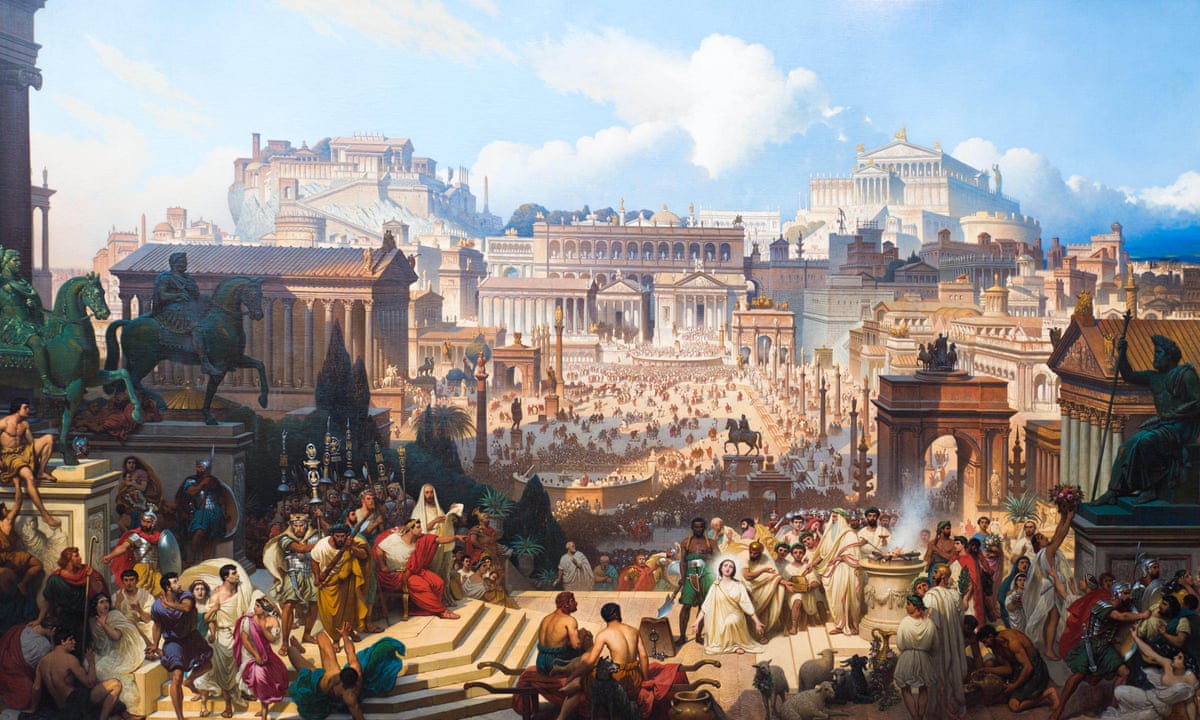
Rome was a HUGE city, the capital of the entire Roman empire.  There were, however, many churches there since there were  “visiting” Romans at the time of Pentecost that were able to go back to Rome and start churches after Peter’s Sermon (Acts 2). So Paul does make it to Rome about 3 years after the letter was written, under not-so-good circumstances.

The purpose of the letter to Rome was to convey that faith in the death and resurrection of Christ is the only ground of acceptance by God A God who shows no favoritism between Jew or Gentile.  We will read that we cannot do for ourselves what God has done for us.  Paul has a sense of sadness and struggles with the fact that Gentiles freely accept and receive the Gospel yet many Jews reject it.

The impact this letter will have on the world is incredible.    This book has changed the course of history for the churches today.  The Book of Romans has influenced such men as Augustine (Catholic Church), Martin Luther (Protestant Reformation), John Bunyan (not Paul the logger but the writer/ preacher of Pilgrim’s Progress), John Wesley (Methodist foundation), and many others.

What to expect to walk away with:

  • A person’s justification before the Lord SOLELY rests on the mercy and grace of Christ and NOT on the Law of Moses (10 commandments).
  • It is not a matter of law at all because no person can EVER live up to God’s standards but God himself.
  • Out of God’s LOVE for every single one of us, he forgives our sins.
  • There is nothing we can do that could give us salvation (and this is coming from a man, Paul, who has given GREATLY) but only God can we receive salvation.
  • WITH THAT SAID, since we have been given that gift despite ourselves, God deserves our wholehearted attention, love, service, loyalty, boldness, obedience, and devotion, not for him to love us, but BECAUSE HE LOVES US.

Words to look for:

  • Righteousness (66 times)
    • Law (78 times)
    • Faith (62 times)

Paul, Letters, and Nero

It is worth a few minutes to look over this timeline of Paul’s life so far:

  • The first row: year 5 AD to 44AD
  • The second row: year 45 AD to 56 AD
  • The third row: year 57 AD to 68 AD

We are about to start the 3rd row in the reading.

Click here to print

Ygs submit browser v2017.12.12 incl keygen cff | preccasa | Bible history, New testament, Galatia

Click here to print

Take a look at this chart. First, we will begin Romans, and then we will read the Prison Letters.  The dates are significant because we are entering a period when Christians are being persecuted greater each year.

We recently read a bulleted list of hardships Paul went through during his ministry.  It is hard for us in safe America to imagine real Christian persecution.  One of the most famous of the tyrannic leaders of this time was Nero.

Born Lucius Domitius Ahenobarbus in December of AD 37, Nero became the fifth emperor of Rome. Nero, along with Rome’s first four emperors:

  1. Augustus,
  2. Tiberius,
  3. Caligula, and
  4. Claudius

They made up what is called the Julio-Claudian dynasty. Nero was adopted by his great uncle Claudius to become his successor, and upon Claudius’s death in AD 54, Nero became the youngest emperor at age 16. His reign lasted nearly fourteen years until AD 68 when he committed suicide at 30.

Christianity was spreading rapidly during this time. In fact, approximately fourteen of the New Testament’s twenty-seven books were written in whole or in part during Nero’s emperorship.

Nero is the “Caesar” who Paul will appeal to for justice during his trial in Caesarea (Acts 25:10–12).

His regime began with mildness and idealism; it ended with cruelty and tyranny. Then, he began murdering anyone who became an obstacle to him; his victims included his own wife and mother as well as his step-brother Britannicus—Emperor Claudius’s biological son.

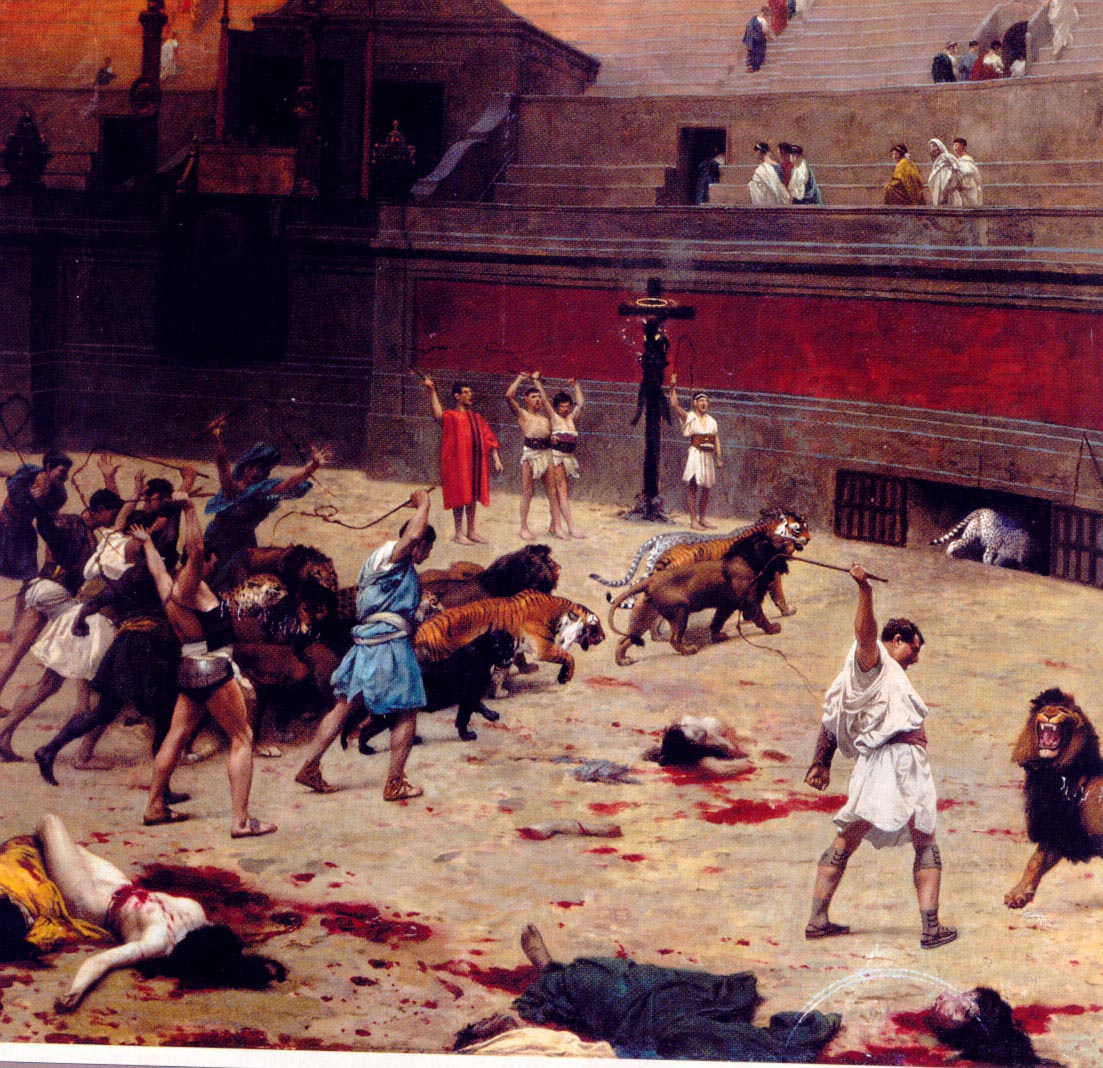
In July of 64, the Great Fire of Rome broke out and lasted for six days.  Some historians believe Nero may have been responsible for the fire (he wanted to rebuild the city, so he burned the poor section), although his involvement is unclear. What is clear is that Nero deflected the focus from himself by blaming the fire on the Christians, many of whom he tortured and killed.  Some of Nero’s tactics towards Christians were”

  • Covering them with fresh animal skins and letting wild dogs tear them apart
  • were nailed to crosses
  • Burned alive: Nero’s use of Christians as human torches to light his evening garden parties is well documented.

Long story short, Nero was declared a public enemy. As a result, Nero was forced to flee Rome and later took his own life. Having no heir to succeed him, Nero was the last of the Julio-Claudian dynasty. Nero’s death was followed by a brief period of civil war, which was then followed by the rise and fall of four emperors in a single year, a chaotic period of Roman history known as “The Year of the Four Emperors.”

D. Persecution of Christians - Christianity and the Roman Empire

Three Radio Shows this Week | Defenders of the Catholic Faith | Hosted by Stephen K. Ray

The Great Fire of London Was Blamed on Religious Terrorism | History | Smithsonian Magazine


2 Corinthians 10-13

We finish out the letters the Corinthians today.✅

Chapter 10-  Actually if you jump down to verse 10 “For some say…” you will see that this chapter is a defense or an appeal to a verbal attack on Paul.    Paul’s appeal is necessary because some in Corinth have tried to persuade the church from not continuing allegiance to Paul.

  1. They try to belittle Paul by drawing a distinction between his letters and his “in-person” personality.
  2. Those who oppose Paul are elevating their own authority by boasting on their credentials and status.

I literally could cut and paste this whole chapter.  It was amazing.  Worth a second read.  Click here.

Homework: I KNOW a scripture stood out to you!  What was it?   (put it in comments, I really love reading them)


Chapter 11

Paul continues with a major concern that they will be led astray.

For if someone comes to you and preaches a Jesus other than the Jesus we preached, or if you receive a different spirit from the Spirit you received, or a different gospel from the one you accepted, you put up with it easily enough.

I am telling you…now that you have read the Bible all the way through, you ARE going to see how the world takes so much scripture out of context.  Let me tell you a quick story.  Within the FBI department, there is a unit just for dealing with counterfeit money.  The agents study for a long time.  They ONLY study real money.  They know it so well,  that when a counterfeit bill is put in front of them they know it immediately.  They never study the counterfeit (it would confuse them)


Now, the matter of $$$ comes up again.  Think of it this way.  If you were hiring a keynote speaker for an event.  One was free and the other was expensive.  You may think, the one that was expensive must be more knowledgeable!  How effective would a speaker be if he didn’t even charge for it?  This was an accusation that was obviously being used to discredit Paul.  He was not willing to take money for sharing the Gospel.

I may indeed be untrained as a speaker, but I do have knowledge. We have made this perfectly clear to you in every way. Was it a sin for me to lower myself in order to elevate you by preaching the gospel of God to you free of charge?


Paul boasts about his suffering

Those who came to speak against Paul boasted in being Hebrew (so was he), an Israelite (so was he), and a descendant of Abraham (so was he).  So they want to boast?  Paul gives them something to boast about!

Paul:

  • I have worked much harder
  • been in prison more frequently
  • been flogged more severely
  • been exposed to death again and again
  • Five times I received from the Jews the forty lashes minus one
  • Three times I was beaten with rods 
  • once I was pelted with stones
  • three times I was shipwrecked
  • I spent a night and a day in the open sea
  • I have been constantly on the move
  • have been in danger from rivers
  • in danger from bandits
  • in danger from my fellow Jews
  • in danger from Gentiles
  • in danger in the city
  • in danger in the country
  • in danger at sea
  • and in danger from false believers
  • I have labored and toiled
  • have often gone without sleep
  • I have known hunger and thirst
  • have often gone without food
  • I have been cold and naked

28 Besides everything else, I face daily the pressure of my concern for all the churches. 29 Who is weak, and I do not feel weak? Who is led into sin, and I do not inwardly burn?


Chapter 12

BUT if Paul wanted to BOAST he could!  If he was going to boast it would be about a vision he received 14 years ago that no else has seen.  This must-have occurred sometime between his 1st and 2nd mission trips.

And I know that this man—whether in the body or apart from the body I do not know, but God knows— was caught up to paradise and heard inexpressible things, things that no one is permitted to tell. I will boast about a man like that, but I will not boast about myself, except about my weaknesses.

See the words ‘caught up’.  Paul was raptured and given a vision.  He said he really could boast about that but he won’t because it is Truth.  But to keep him from getting conceited and humble, the Lord did allow him some type of physical pain.  It must have been pretty severe, we know Paul has a high pain threshold for the Lord (from the above list):

 Therefore, in order to keep me from becoming conceited, I was given a thorn in my flesh, a messenger of Satan, to torment me. Three times I pleaded with the Lord to take it away from me. But he said to me, “My grace is sufficient for you, for my power is made perfect in weakness.” Therefore I will boast all the more gladly about my weaknesses, so that Christ’s power may rest on me. 10 That is why, for Christ’s sake, I delight in weaknesses, in insults, in hardships, in persecutions, in difficulties. For when I am weak, then I am strong. ❤️


As Paul closes out the book, we go back to the purpose of this letter.  Was this defense really to save Paul or Titus’ name?  No.

19 Have you been thinking all along that we have been defending ourselves to you? We have been speaking in the sight of God as those in Christ; and everything we do, dear friends, is for your strengthening.

Paul says he will return again to Corinth but leaves them some homework in the meantime.  See I am not the only one who leaves homework!  (His is just better)

Examine yourselves to see whether you are in the faith; test yourselves. Do you not realize that Christ Jesus is in you—unless, of course, you fail the test? And I trust that you will discover that we have not failed the test.

2 Corinthians 5-9

Epistles | Scarlet Inkwell

I am going to be transparent: is it just me or are these 2 letters hard?   Maybe it is just me.

Paul spoke in the last letter about the resurrection, but now he takes it deeper.  He talks about what he expects for himself after death.  He uses the word “tent” because it coincided with the local teaching of Plato and Pythagoras.  He explains how our earthy body “tent” will be transformed into an eternal house.  This will happen when we receive our “new clothing” at our resurrection.  We know this to be true because he gives us a “deposit guaranteeing what is t come” (Holy Spirit).

15 And he died for all, that those who live should no longer live for themselves but for him who died for them and was raised again.

No longer can those who belong to Christ live for themselves, but to live for Christ!


If there was ever a scripture to memorize in this book it is:

20 We are therefore Christ’s ambassadors, as though God were making his appeal through us. We implore you on Christ’s behalf: Be reconciled to God. 21 God made him who had no sin to be sin for us, so that in him we might become the righteousness of God.

My pencil underlined words this year like Ambassadors (verse 5:20), Co-Workers (verse 6:1), Servants (6:4), and then a series of comparisons: what appears to be failures are victories:

Rather, as servants of God we commend ourselves in every way: in great endurance; in troubles, hardships and distresses; in beatingsimprisonments and riots; in hard work, sleepless nights and hunger;

Failures?

Nope!  Victories!!

in purity, understandingpatience and kindness; in the Holy Spirit and in sincere love; in truthful speech and in the power of God; with weapons of righteousness in the right hand and in the left;

  • through glory/dishonor,
  • bad report/good report;
  • genuine/regarded as impostors;  
  • known/yet regarded as unknown;
  • dying/yet we live on;
  • beaten/not killed;
  • sorrowful/always rejoicing;
  • poor/making many rich;
  • having nothing/yet possessing everything.

In the first letter (chapter 15:33) Paul says:3Do not be misled: “Bad company corrupts good character.”  In this letter, he expounds on that:14 Do not be yoked together with unbelievers. Using Deuteronomy 22:10 as a reference of not plowing a field with a donkey and an ox.

Be Yoked to Jesus

One is strong, one is weak.  One is a clean animal, one is considered unclean.  They are not equal and they will not make progress.  Paul drives the point home with 5 rhetorical questions:

  1. For what do righteousness and wickedness have in common?
  2. What fellowship can light have with darkness?
  3. What harmony is there between Christ and Belial (the devil)?
  4. What does a believer have in common with an unbeliever?
  5. What agreement is there between the temple of God and idols? 

The Corinthians are living in both worlds. Are you?

“Come out from them
    and be separate,
says the Lord.


Chapter 7

Go back and read chapter 7:8-13.

Even if I caused you sorrow by my letter, I do not regret it. Though I did regret it—I see that my letter hurt you, but only for a little while— yet now I am happy, not because you were made sorry, but because your sorrow led you to repentance.

Paul knew that his last letter was strong and may have hurt them.  When we read 2 Timothy it will say : 16 All Scripture is God-breathed and is useful for teachingrebukingcorrecting and training in righteousness, 17 so that the servant of God may be thoroughly equipped for every good work.


Chapter 8

Paul compares a collection he took for the church in Macedonia to Corinth.  They gave beyond their means and exceeded Paul’s expectations.   Paul reiterates that giving is not a command, but as proof for your Love for Christ.

I am not commanding you, but I want to test the sincerity of your love by comparing it with the earnestness of others. For you know the grace of our Lord Jesus Christ, that though he was rich, yet for your sake he became poor, so that you through his poverty might become rich.

Paul chose Titus to take up the collection, and the Corinthians chose an unnamed man to partner with him.  There was a lot of criticism being taught by others to defame Paul’s name and his purpose for taking up collections in the church.  The two men will be appointed to make sure that the collection is for the Lord and not to line Paul’s pockets.

20 We want to avoid any criticism of the way we administer this liberal gift. 21 For we are taking pains to do what is right, not only in the eyes of the Lord but also in the eyes of man.

17 For Titus not only welcomed our appeal, but he is coming to you with much enthusiasm and on his own initiative. 18 And we are sending along with him the brother who is praised by all the churches for his service to the gospel. 19 What is more, he was chosen by the churches to accompany us as we carry the offering, which we administer in order to honor the Lord himself and to show our eagerness to help. 20 We want to avoid any criticism of the way we administer this liberal gift. 21 For we are taking pains to do what is right, not only in the eyes of the Lord but also in the eyes of man.

24 Therefore show these men the proof of your love and the reason for our pride in you, so that the churches can see it.

Close your eyes.  Take a deep breath.   On this Sunday, when you might be about to go Christmas shopping: read this, and let the Holy Spirit speak to you.  Remember what will be written in 2 Timothy 16 All Scripture is God-breathed and is useful for teachingrebukingcorrecting and training in righteousness, 17 so that the servant of God may be thoroughly equipped for every good work.

OK.  Click here and read.

Now that I finished the read, it wasn’t as hard as I thought 😂.


2 Corinthians 1-4

The recipients of this epistle knew “Timothy” well. He had come to faith in Christ evidently through Paul’s ministry in Lystra in Asia Minor. He had accompanied Paul on his journey from the second missionary journey on and had gone to Corinth.

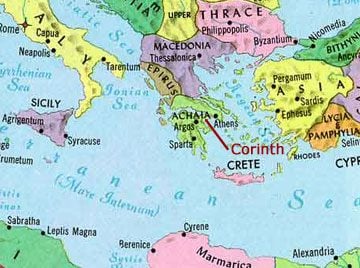
Corinth was an important commercial center. The city may have contained over a half-million people at this time. It stood on the narrow land bridge (isthmus) that connected the southern part of Greece (the Peloponnesus) with the northern part.

A Church as a Body, Part 2 | Mark Roberts

This shortcut saved merchants the long trip around the southern coastline of Greece. Corinth was the capital of the province of Achaia and the headquarters of a Roman proconsul (governor). It had been the notorious center for the immoral worship of the goddess Aphrodite, and its population was cosmopolitan, consisting of Romans, Greeks, Orientals, and Jews.

Paul intended that the Corinthian Christians would read this letter in the church, but he also wanted all the Christians in the province of Achaia to read it. We know that at this time there was another Achaian church in Cenchrea, and perhaps one in nearby Athens.


“Comfort” (paraklesis) is the keyword in this section, occurring 16 times.  2 Corinthians truly is a letter of encouragement.   Paul opens with a greeting and tells them had he intended to visit them but he has experienced trouble, pressure, and at times near death.  For their sake, he did not return. BUT he has comfort in all things.

21 Now it is God who makes both us and you stand firm in Christ. He anointed us, 22 set his seal of ownership on us, and put his Spirit in our hearts as a deposit, guaranteeing what is to come.

  1. they had experienced an “anointing,” as had Christ (the “Anointed One”). This took place when they trusted Christ as their Savior.
  2. they had all experienced a “sealing.” A seal signified ownership, authentication, confirmation, and security.
  3. they had received the Holy “Spirit” as a down payment of the inheritance God has promised.

Chapter 2.

Discipline and correction are hard.  Paul’s last letter was stressful so this time he writes:

For I wrote you out of great distress and anguish of heart and with many tears, not to grieve you but to let you know the depth of my love for you.

Verse 5 talks about forgiving an offender.  This might be talking about the man he referenced in the first letter that was unrepentant.  They were told to disassociate with him so that he would repent.  It appears now it is time to forgive.


For we are to God the pleasing aroma of Christ among those who are being saved and those who are perishing.

When proper sacrifices were made in the Old Testament, it was noted that it was a pleasing aroma to God.  The smell was not pleasing,  it was what the smell represented that was.  When we sacrifice ourselves to the Lord’s will we are a pleasing aroma to the Lord.


Chapter 3

You yourselves are our letter, written on our hearts, known and read by everyone. You show that you are a letter from Christ, the result of our ministry, written not with ink but with the Spirit of the living God, not on tablets of stone but on tablets of human hearts.

❤️❤️❤️❤️❤️❤️

He has made us competent as ministers of a new covenant—not of the letter but of the Spirit; for the letter kills (The Law: The Old Testament), but the Spirit gives life (The Cross: The New Testament).


I know it is frustrating for Christians to talk to unbelievers.  WHY DON’T THEY GET IT??  The scriptures will confuse them because there is a “Veil” that is between them and the Truth.  (So don’t get frustrated).  The veil was torn for you!

16 But whenever anyone turns to the Lord, the veil is taken away. 17 Now the Lord is the Spirit, and where the Spirit of the Lord is, there is freedom. 18 And we all, who with unveiled faces contemplate the Lord’s glory, are being transformed into his image with ever-increasing glory, which comes from the Lord, who is the Spirit.

Before that Paul goes on to say that, just as Moses gave Israel the Law with a veil over his face, even today, when the Law is read, a veil descends over the hearts of unbelieving Israelites. Then and now, Israel’s vision is obscured, and they are hard of heart. The “veil” prevents them from seeing the true glory of God. The veil is only taken away when they turn to Christ.


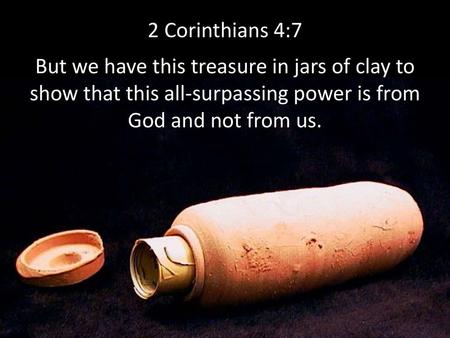
7 But we have this treasure in jars of clay, to show that the surpassing power belongs to God and not to us. 8 We are afflicted in every way, but not

But we have this treasure in jars of clay to show that this all-surpassing power is from God and not from us. We are hard pressed on every side, but not crushed; perplexed, but not in despair; persecuted, but not abandoned; struck down, but not destroyed. 10 We always carry around in our body the death of Jesus, so that the life of Jesus may also be revealed in our body.

You are the jar of clay that the hands of God created:  “Then the Lord God formed a man from the dust of the ground and breathed into his nostrils the breath of life, and the man became a living being”. Genesis 2:7.    The Gospel is the treasure inside you.  The sacrifice and resurrection of Christ.

13 It is written: “I believed; therefore I have spoken.” Since we have that same spirit of faith, we also believe and therefore speak, 14 because we know that the one who raised the Lord Jesus from the dead will also raise us with Jesus and present us with you to himself. 15 All this is for your benefit, so that the grace that is reaching more and more people may cause thanksgiving to overflow to the glory of God.


AND my favorite in this read is:

18 So we fix our eyes not on what is seen, but on what is unseen, since what is seen is temporary, but what is unseen is eternal. ❤️.

(this scripture always takes me to Hebrews Chapter 11: Faith.)