2 Kings 15 and 2 Chronicles 26

  • Click here to read
  • Click here to listen
  • Before you even start, you might be able to say to yourself “The book of Kings will talk about BOTH Judah and Israel, but the Chronicles will only talk about____________”

We are going downhill today…

Azariah-King of Judah- (see above)  By the way Azariah also goes by the name Uzziah.  (2 Chron Uzziah is Azariah)  Azariah was one of Judah’s most popular, effective, and influential kings. He expanded Judah’s territories, fortified several Judean cities, including Jerusalem, and reorganized the army.  Unfortunately, Azariah (Uzziah) became proud, and in disobedience, to the Law and performed functions only the priests could perform:

Chron. 26:16 But after Uzziah became powerful, his pride led to his downfall. He was unfaithful to the Lord his God, and entered the temple of the Lord to burn incense on the altar of incense.

For this sin God punished him with leprosy


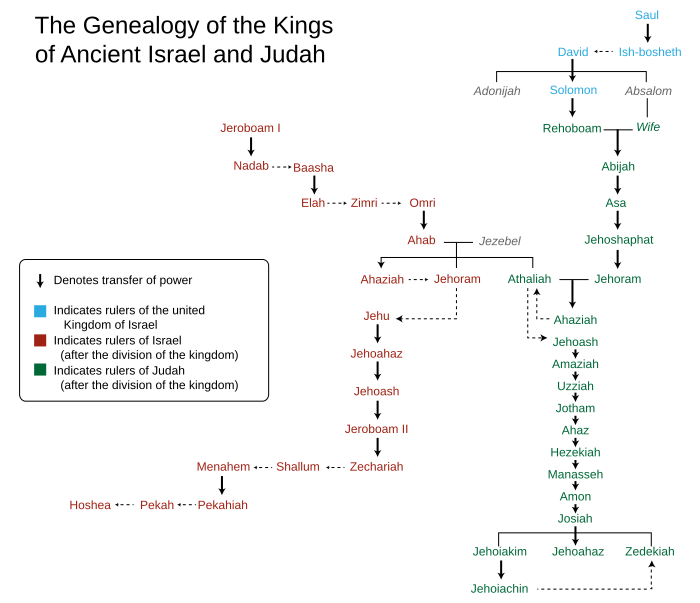
Look at the left column when we talk about the horrible kings of Israel….

Zechariah-King of Israel- Zechariah reigned only six months before Shallum assassinated him. Zechariah was the last king of Jehu’s dynasty. Shallum was the son of Jabesh (not a natural successor.

2 kings 10:30 ““Because you have done well in accomplishing what is right in my eyes and have done to the house of Ahab all I had in mind to do, your descendants will sit on the throne of Israel to the fourth generation.” 


Shallum-KIng of Israel- another assassination. So evidently Menaham was not happy about Shallum being the new king.  After all, Menahem was the commander in chief.  He thinks it should have been him.   It’s chaos! Shallum only sat on the throne (meaning kingship, not the toilet) for only 1 month.


Menahem-KIng of Israel- He reigned 10 years but then Pul, king of Assyria attacked the land.  Let me repeat that: the king of Assyria attacked the land!  This is the first mention of Assyrian kings as they have been growing to be a world power.  The year is 742 (only 20 years to go) and we now see this rise in power of the enemy nation beginning to infiltrate the Israelites.  Not good I tell ya!  Not good at all!!


Pekahiah-King of Israel-In 742 B.C., Pekahiah began his two-year reign (742-740 B.C.). It ended when Pekah, one of his military officers, assassinated him in Samaria, in addition to Argob and Arieh, who were probably Israelite princes and influential friends of the king


Pekah-King of Israel “In the time of Pekah king of Israel, Tiglath-Pileser (Pul) king of Assyria came and took Ijon, Abel Beth Maakah, Janoah, Kedesh and Hazor. He took Gilead and Galilee, including all the land of Naphtali, and deported the people to Assyria.

So Pekah made an alliance with Pul, and attacked Judah.  They started deporting people to Assyria?  What? What is beginning to happen here!  (If you have read the Bible already you know…if not you will)


KIng of Judah-Jotham-he is the last “mediocre” king.  After this, we have 2 revival kings and 7 evil kings.  He was twenty-five years old when he became king, and he reigned in Jerusalem sixteen years…The high places, however, were not removed; the people continued to offer sacrifices and burn incense there. Jotham rebuilt the Upper Gate of the temple of the Lord.

Look at your schedule.  Tomorrow we start Isaiah.  Anyone want to take over the blog for Isaiah? 😬
The book of Jonah

The whole book is only a 7-minute read.

Chapter 1- I really don’t think I need to break this down.  It is written as a narrative so it’s pretty clear.  What is interesting to look at is the differences between Jonah (who knew the Lord) and the Sailors who did not know the Lord but worshipped many gods.  (It’s kind of like many Christians today and the world around us sadly):

Jonah

Sailors

He is a Hebrew with a rich history of God’s faithfulness They were Gentiles with no history of God
He is monotheistic, believing in one true God They are polytheistic, worshiping many false Gods
He is rightly related to the true God They had no relationship with the true God
He was spiritually insensitive, going in the wrong direction They are spiritually sensitive, going in the right direction.  They prayed.
He is indifferent toward God’s will in spite of knowing him They were concerned before God in spite of little or no knowledge of him
He was uncompassionate toward Nineveh They were compassionate toward Jonah
Jonah was rebellious and therefore disciplined, but not destroyed They were brought to worship and commitment

Chapter 2

Jonah was in the belly of the fish for three days and three nights. A foreshadow of the resurrection.  A sign of what was to come!  Three days in the tomb would bring salvation!

Jesus said: Matthew 12:

38 Then some of the Pharisees and teachers of the law said to him, “Teacher, we want to see a sign from you.”

39 He answered, “A wicked and adulterous generation asks for a sign! But none will be given it except the sign of the prophet Jonah. 40 For as Jonah was three days and three nights in the belly of a huge fish, so the Son of Man will be three days and three nights in the heart of the earth. 41 The men of Nineveh will stand up at the judgment with this generation and condemn it; for they repented at the preaching of Jonah, and now something greater than Jonah is here.


Chapter 3-The second half of this book records Jonah’s obedience to the Lord  However, he was not completely obedient in his attitudes even though he was in his actions.

The Prayer- Look at it closely…he was praying thanks for his own deliverance.   You know when you have that moment of huge desperation that you start praying everything you can think of.  This prayer is a mixture of Job, Lamentations, and 9 Psalms combined!

Someone once said “Exposure to Scripture doesn’t guarantee a godly life” (that’s for free, you can steal that)

But God is merciful.  He provided a way to save him.


Chapter 4- So we read this story and we concentrate on the sailors, the storm, the 3 days,  the Ninevites, or the whale.  We might assume that the Lord’s deliverance of the Ninevites from doom is the climax of the story. This is not the case. An important lesson of the book deals with God’s instrument: us. Jona appears selfish, petty, temperamental, and even downright foolish in chap. 4.

But to Jonah, this seemed very wrong, and he became angry. He prayed to the Lord, “Isn’t this what I said, Lord, when I was still at home? That is what I tried to forestall by fleeing to Tarshish. I knew that you are a gracious and compassionate God, slow to anger and abounding in love, a God who relents from sending calamity. Now, Lord, take away my life, for it is better for me to die than to live.”

In other words, he hoped that the Ninevites would not respond to his call for repentance and that God’s judgment would follow.  We can do the will of God without doing it with the right attitude, and that is the focus of the remainder of the book.  The irony that Jonah was saved through the whale God provided…was this any different?

God provided a plant to ease his discomfort.   Jonah was undeserving of such mercy, just as the Ninevites were underserving of theirs.  That’s why it’s called Mercy.

We use the phrase “The lost act lost”.  Those are the ones we are to bring the Gospel to.  Not judge them.  God saved 120,000 that day.  What an amazing God, and he can use us for this purpose.

Jonah Overview

Jonah Part 1 - A Great Commission, A Great Rebellion, and A Great Mercy — Redemption Parker

When you hear the word Jonah, most of us think of the word Fish.  I am hoping after tomorrow when you hear the word Jonah anything but the word “fish” comes to mind.  Redemption, Salvation, Grace, Love, Mission…

I am going to tell you the beginning and the end: It starts with Jonah being called to the mission field.

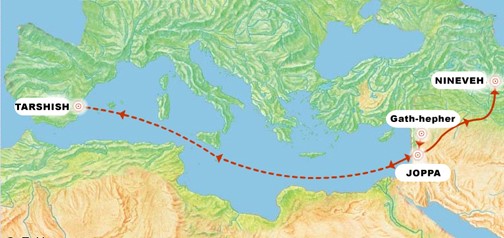
The word of the Lord came to Jonah son of Amittai: “Go to the great city of Nineveh and preach against it, because its wickedness has come up before me.”But Jonah ran away from the Lord and headed for Tarshish.

The contrast between Nineveh and Tarshish was vast. Nineveh was located east of the Tigris River in modern-day Iraq. It was more than 500 miles east of Jonah’s hometown. Tarshish, in contrast, was west of Gath-Hepher. In fact, Tarshish stood more than 2,500 miles from Israel in the opposite direction of Nineveh. It was the most remote destination available to Jonah. Jonah was trying to put as much distance as he could between himself and the Ninevites “Assyrians”. Actually between himself and God.

Walking Through the Word: Nineveh, Land of the Assyrians — Part 2 ...

You can read this story from “our” perspective or you can try to think of it from God’s perspective.  There is not one person on this Earth that God would close the door of Salvation.

For God so loved the world that he gave his one and only Son, that whoever believes in him shall not perish but have eternal life.17 For God did not send his Son into the world to condemn the world, but to save the world through him. 18 Whoever believes in him is not condemned, but whoever does not believe stands condemned already because they have not believed in the name of God’s one and only Son.

Jonah was from Gath-Hepher, a town right outside Nazareth (Jesus’ hometown).  Nineveh is the capital of Assyria. (Modern day Iraq)  The Assyrians were a huge and cruel nation.  They were warriors that built their kingdom on their pillage from other countries.  Their morals were horrible.  The Assyrian kings kept a detailed record of their conquests and made art of their brutalities to hang on their walls.  They spread complete fear throughout the land in order to keep the nations in line to collect taxes.

Archeologists have uncovered some of their documentation: here are the people of Ninevah:

  • Cut off their hands and fingers, noses, and ears.
  • Skin them alive and put their skin on the walls of the cities they conquered.
  • Cut off their heads and put them on stakes and line the roads to their city.
  • Swing babies by their ankles and crack their heads against a stone wall.
  • Formed pillars of their corpses.
  • Impaled men on stakes against their city gate.
  • Cut off their privates and carried them as tokens as an object lesson for all lands.
  • Cut off their testicles and tore out their privates like seeds
  • They skinned men alive
  • Cut out their tongues
  • Gauged out their eyes for fun
  • Dismembered their bodies
  • and then made mounds of the skulls as decorations in their empire

To name a few!

Many scholars are divided over whether this book is fiction, an allegory, a parable, or a prose poem.  However, here is the deal…do you believe God created the heavens and the earth in 6 days? Do you believe God consumed a sacrifice with fire that was soaked in water? Do you believe the words written in red that Jesus spoke?  I do.

Jesus said in Matthew 12:40 “For as Jonah was three days and three nights in the belly of a huge fish, so the Son of Man will be three days and three nights in the heart of the earth”.

I have no doubt that the story is exactly as it reads.  If God says it, it is true. If Jesus accepts the Jonah story, I accept the Jonah story.

So a quick summary of what you are about to read. Jonah gets “called” to Nineveh, this cruel horrible city to denounce the wickedness of the people.  Jonah says, No and gets on a boat and heads in the opposite direction.

Why?

  • Is he afraid of these awful people?
  • Thinks what’s the point, they won’t change anyway?
  • If God’s own Chosen People won’t choose God and repent, why would these people?

NO that is not why he goes the other way!!! He goes the other way because he KNOWS God and He knows that if he is sending him on a mission then He is at work! And they probably will repent and be forgiven and he does not want that.  Jonah hates the Assyrians.  Spoiler alert:  At the end of the book Jonah admits WHY he did not want to go:

 I knew that you are a gracious and compassionate God, slow to anger and abounding in love, a God who relents from sending calamity.

This story is NOT about a fish, it is about God’s Love.  God’s Mercy.  God’s Grace.  His love extends to the whole world, even the worst people in the world. (Thank Heavens for me!!)

Prophets Overview

I wasn’t planning on doing a Prophets Overview, just an overview of each Prophet book, but as I started researching I found it so interesting so I thought I would share.  A few years ago I really didn’t know much about the Prophet books so I assumed they were about “predicting the future”.  Well, that is not true.

Prophecy is a message from God, and a Prophet is a person who delivers the message.  There are 17 Prophecy books.  That does not mean there were only 17 Prophets.  Actually,  there have been hundreds. Originally the term prophet was used for military and judicial leadership, for example, Moses and Deborah.  Then it was used by people who heard directly from the Lord, like Samuel.  During the Monarchy they became advisers to the Kings (like Nathan to David), and now have been reading about prophets like Elijah and Obadiah.

So there are 2 Categories of Prophets

  • Major Prophets
  • Minor Prophets.

What is the difference? One is major and the other is minor!  (Just Kidding).  It has NOTHING to do with importance (which I thought) it has to do with SIZE of the book.  The minor books may be short but POWERFUL!  SO don’t get up into Heaven and try to meet the Major Prophets first and snub the Minors.  They are equal in the importance of the message.  God’s word is Sovereign, Supreme, and Ultimate regardless of the length of the message.

The period of the prophets in the recorded books (17 in the Bible) covers about 500 years which were the Dark Ages of God’s Chosen people.  The prophets were men whom God raised up during the dark days of Israel’s history.    The prophet’s job was to deal with moral and religious problems and disobedience.  Sometimes a prophet would speak of the judgment of current sin and sometimes he would speak of the future if that was the message God gave him to speak. The message of the Bible is timeless and just as applicable today as it was the day it was written. (God knew what He was writing) So are these books relevant today??

  • They are the message of God
  • Written through real-life experience
  • Speaks of human nature
  • Addresses sin

Uhhhh I would say Yes!  The Prophecy books take up the same amount of “space” in the Bible as the New Testament.  I would say God thinks of them as pretty important.

So in conclusion, we know the Babylonian Exile  (captivity) is coming up,  so the Prophets can be divided into 3 categories:

  1. Pre-captivity,
  2. during captivity,
  3. and after captivity

We would also divide them as to who the Prophet is addressing.

So the Prophets BEFORE the exile in Chronological order are Obadiah (we just read that), Joel, Jonah (cannot wait for the Big fish Big God story) Amos, Hosea, Isaiah, Micah, Nahum, Habakkuk, Zephaniah, and Jeremiah (not the bullfrog).

The Prophets DURING the exile (or captivity in Babylon) are Ezekiel and Daniel.

The Prophets AFTER the return are Haggai, Zachariah,  and Malachi.

The Prophets were fearless men who denounced the sins of their day. We are judged individually and collectively as a nation.  That’s a scary thought, isn’t it?

If you would like a handout…here you go.  ✅

Posting an overview on Jonah tonight!   Stay tuned,


2 Kings 14 and 2 Chronicles 25

So as soon as I see “Amaziah king of Judah” I immediately need to look at my visual”.  The two reads fit like a puzzle piece.  So if you already read and totally got it you can skip today’s post.  It is just a recap of the read.

Amaziah of Judah reigned over Judah for 29 years (796-767 B.C.). He began reigning when Jehoash was king over Israel and died during the reign of Jehoash’s son and successor Jeroboam II.

One of Amaziah’s acts of goodness that the writer of Kings included was his obedience to the Law in the matter of not executing children for their fathers’ crimes (Deut. 24:16). Kings of other ancient Near Eastern countries commonly practiced such executions. Amaziah instead trusted God to control the potential rebels.

Amaziah was victorious over Edom and become prideful. (Have they not learned that any victory they have is from the Lord…oh wait…have I?.  So Amaziah (Judah) picks a fight with Jehoash (Israel).  So like children, they tease each other and Jehoash calls him a little thistle compared to himself as a cedar in Lebanon. (Listen, I am on Summer Break!  I feel like I am back with my school kids!) He warns him not to pick a fight but to just go home.  (In my head I can see people standing around saying “fight fight fight”.”)Tweek vs Craig Picture - TV Fanatic

God permitted this situation to punish Amaziah because after subduing the Edomites, he had brought some of their idols into Jerusalem and worshipped them. (2 Chron. 25:14, 20)  The army of Israel took Amaziah prisoner.

When Jehoash died, they released Amaziah who returned to Judah. But….we end on a sad note:

From the time that Amaziah turned away from following the Lord, they conspired against him in Jerusalem and he fled to Lachish(a former royal city) but they sent men after him to Lachish and killed him there. 28 He was brought back by horse and was buried with his ancestors in the City of Judah.

Israel - Ancient History Encyclopedia


Jeroboam II’s reign of 41 years was the longest in Israel’s history (793-753 B.C.).   

“He was the one who restored the boundaries of Israel from Lebo Hamath to the Dead Sea, in accordance with the word of the Lord, the God of Israel, spoken through his servant Jonah son of Amittai, the prophet from Gath Hepher”.

Soooo guess what book we read tomorrow???  Jonah and the Big Fish God!

2 kings 12-13 and 2 Chron 24

The reading starts with:

In the seventh year of Jehu, Joash became king, and he reigned in Jerusalem for forty years. His mother’s name was Zibiah; she was from Beersheba. Joash did what was right in the eyes of the Lord all the years Jehoiada the priest instructed him. The high places, however, were not removed; the people continued to offer sacrifices and burn incense there.

So we see JERUSALEM and DID RIGHT…therefore we KNOW this must be a king from Judah,  BUT he did not take down the “high places”.  High places were man-made places to make sacrifices, which copied pagan ways, to make sacrifices.  Judah had no excuse to do this since the Temple was in their territory.

Joash was the youngest king to mount Judah’s throne. He began reigning at age seven and ruled for 40 years (835-796 B.C.). His father was Ahaziah, the most recent male ruler of Judah, and his grandmother was Athaliah. Joash was mentored by a priest named Jehoiada.  His claim to fame was bringing the Temple back to the Holy Sanctuary God had intended it to be.  JUST in case you read 2 Kings BUT skimmed 2 Chronicles (who would do that…ummmm me!) I will pull in a line or two that you may have missed.

So why did the temple need repair (besides years of neglect)?

2 Chron 24:7- Now the sons of that wicked woman Athaliah had broken into the temple of God and had used even its sacred objects for the Baals.

I AM COMING SOON! : Joash Repairs The Temple

Click here for a bigger copy or a printable one of this: you can find her just above Joash on the right side.

Joash started off so strong but he ended on a sour note.  He made 2 big mistakes.  Remember the other day the map of Aram.  Aram wanted to be able to use the coast for trading.  King Hazael of Aram had defeated Israel during the reigns of Jehu and Jehoahaz (chapter 13). He then pressed south along the Mediterranean coast toward Judah. He captured Gath and then sent soldiers against Jerusalem who killed many Judean leaders.

  1.  Joash: Rather than turning to God for deliverance, Joash bought Hazael off with gold from the renovated temple. (12:17-18)
  2. He went the way of the world and eventually worshiped like they did. I am not kidding, he abandoned the Temple project as well as the Temple itself! (2 Chon 24-17-19 if you want to go back to read it)

2 Kings Chapter 13

Don’t let the names overwhelm you.  Look at the subtitle.  King of Judah or King of Israel.  That will help you.  We are getting close to the end of Israel so you will see them getting weaker and weaker.

Nothing had been left of the army of Jehoahaz except fifty horsemen, ten chariots and ten thousand foot soldiers, for the king of Aram had destroyed the rest and made them like the dust at threshing time.

Follow your King chart, next is Jehoash (Israel side)

Elisha is dying (did anyone stop and think…did he see it coming?)  Jehaosh weeps over this.  Why?   Because Elisha is the only reason they have not fallen into enemy hands.

14 Now Elisha had been suffering from the illness from which he died. Jehoash king of Israel went down to see him and wept over him. “My father! My father!” he cried. “The chariots and horsemen of Israel!”

Look at some of your visuals.  Now that both Israel and Judah are falling apart, God still loves them so much,  that He is going to start sending prophets with strong messages to try to get them to turn from their evil ways. (peek at the schedule coming up)

30. Understanding the Writing Prophets

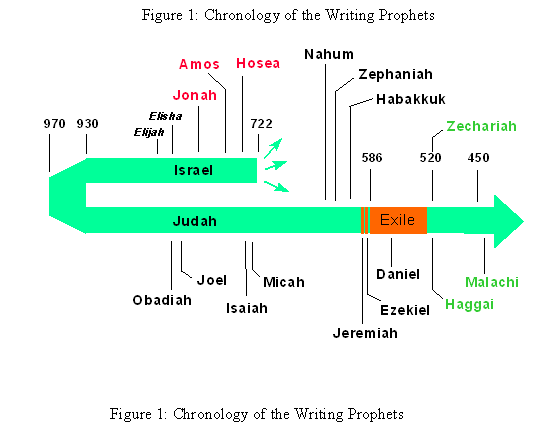
Question:  Explain this diagram to me (even though it has not happened yet.)  Why are there little green arrows at 722?  What is the orange?  Why 2 little lines and then one fat orange line?

2 Kings 9-11

2 Kings

Take a minute and get your bearing on the graph.  Before today’s read Israel and Judah were kind of able to co-exist in the land, they even at times made small alliances to fight enemy territory.    This will come to an end now.  The year is 841 BC when Jehu takes the throne.  The Northern Kingdom will be taken into captivity in 722 BC (remember the years count backward).  Time is running out for the Israelites to get it together.  (But God is going to try everything to get them to turn from idol worship and let them see He is the one true God.)

We begin today with the fulfillment of prophecy from the Lord to Elijah.  1 Kings 19:

15 The Lord said to him, “Go back the way you came, and go to the Desert of Damascus. When you get there, anoint Hazael king over Aram. 16 Also, anoint Jehu son of Nimshi king over Israel, and anoint Elisha son of Shaphat from Abel Meholah to succeed you as prophet. 17 Jehu will put to death any who escape the sword of Hazael, and Elisha will put to death any who escape the sword of Jehu. 18 Yet I reserve seven thousand in Israel—all whose knees have not bowed down to Baal and whose mouths have not kissed him.”

Elisha sent the man to anoint Jehu and told him to run for his own safety!  Just as Elijah and Elisha were used as instruments from God so was Jehu in this case.

Question: Do you think Jezebel put makeup on as a pagan ritual, did she know she was going to die and prepared herself to look pretty for it,  or do you think she was going to try to seduce him? 🤷‍♀️

Back in 1 Kings 21:17-

“I have found you,” he answered, “because you have sold yourself to do evil in the eyes of the Lord. 21 He says, ‘I am going to bring disaster on you. I will wipe out your descendants and cut off from Ahab every last male in Israel—slave or free.22 I will make your house like that of Jeroboam son of Nebat and that of Baasha son of Ahijah, because you have aroused my anger and have caused Israel to sin.’

23 “And also concerning Jezebel the Lord says: ‘Dogs will devour Jezebel by the wall of Jezreel.’

10 JEZEBEL!!! ideas | jezebel, bible for kids, bible characters


So read Chapter 10…it’s like a scene from a Hollywood movie!   The Lord is using Jehu to clean house so why in this is he considered a bad king, not a good king?

2 Kings

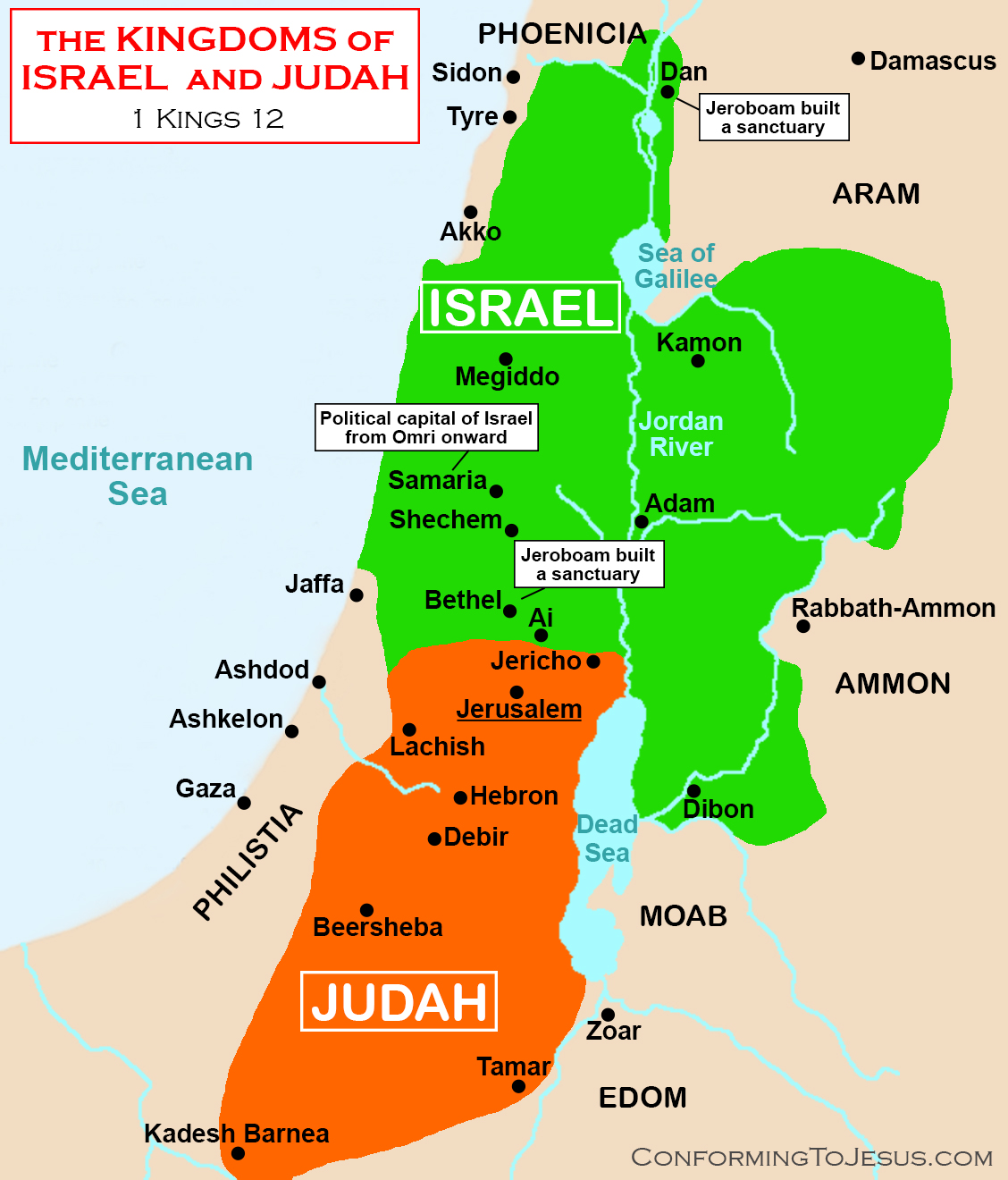
Stay with me….don’t get overwhelmed.  You got this!  Do you remember when Jeroboam and Rehoboam divided the kingdom over the tax issue? (Do you remember the ‘J’ and the ‘R’)  One went North and one went South.  So if the temple was in the South…where was the North going to worship???

Back in 1 Kings 12:

25 Then Jeroboam fortified Shechem in the hill country of Ephraim and lived there. From there he went out and built up Peniel.

26 Jeroboam thought to himself, “The kingdom will now likely revert to the house of David. 27 If these people go up to offer sacrifices at the temple of the Lord in Jerusalem, they will again give their allegiance to their lord, Rehoboam king of Judah. They will kill me and return to King Rehoboam.”

28 After seeking advice, the king made two golden calves.  (Nooooo!) He said to the people, “It is too much for you to go up to Jerusalem. (No, it’s not!) Here are your gods, (what???)  Israel, who brought you up out of Egypt.” 29 One he set up in Bethel, and the other in Dan. 30 And this thing became a sin; the people came to worship the one at Bethel and went as far as Dan to worship the other.

They built an altar to the Lord. Look at this:

Jehu is currently in the political capital of the nation.  Jehu was good to burn the Baal worship….BUT if he tears down the golden calves he is committing political suicide! 

So Chapter 10 ends with: (I hope this makes sense now)

30 The Lord said to Jehu, “Because you have done well in accomplishing what is right in my eyes and have done to the house of Ahab all I had in mind to do, your descendants will sit on the throne of Israel to the fourth generation.” 31 Yet Jehu was not careful to keep the law of the Lord, the God of Israel, with all his heart. He did not turn away from the sins of Jeroboam, which he had caused Israel to commit.

Even though Jehu meeses up, God still continues the kings in that line.   Extra credit:

  • What is the name of the Covenant that says this line will not be snuffed out?
    • And extra point if you memorized the Book chapter and scripture..

Chapter 11- We switch to the tribe of Judah now.  The Davidic Line. The Covenant.

We began this story the other day in Chronicles but we never knew what happened after the baby was hidden.  The entire family of Ahaziah was killed.  What…can’t be.  God promised a king through the line of David to bring the Messiah.  Oh wait, there is a woman on the scene to save the day!  She takes Joash as a baby and hides him for 7 years!

Long Live the KIng!!!

Joash was the youngest king at 7 years old. | True Bible Facts

20 All the people of the land rejoiced, and the city was calm, because Athaliah had been slain with the sword at the palace.

21 Joash was seven years old when he began to reign.

2 Kings 5-8

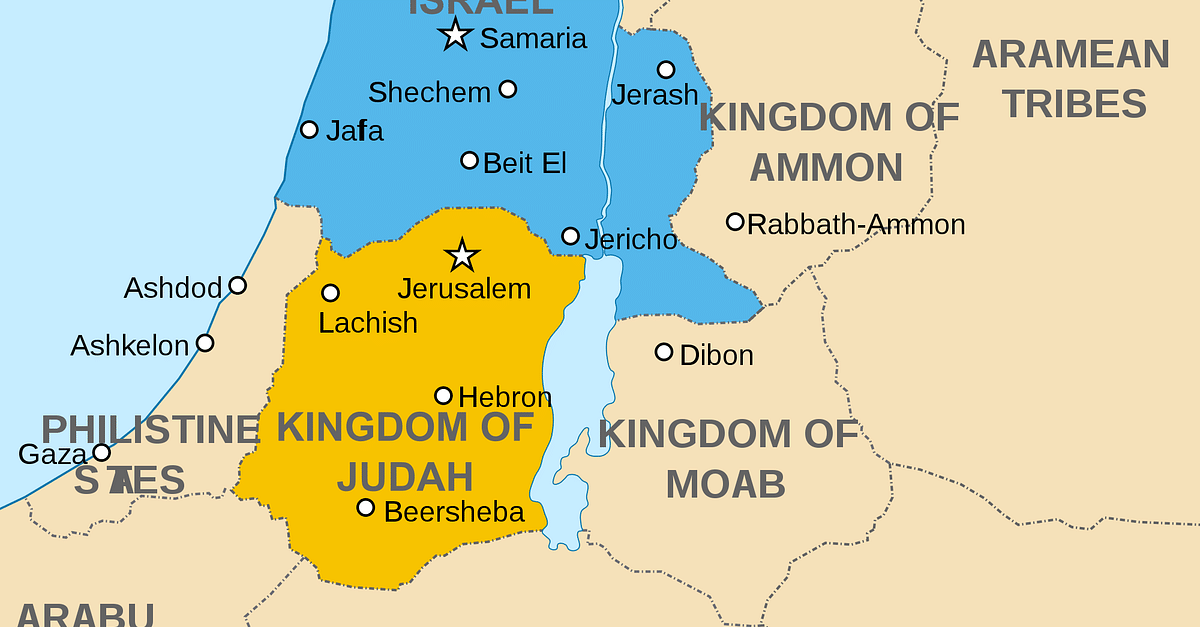
2 Kings 5 is one of my new favorites.  Naaman is a commander to the king of Aram.  You can see on this map that it is a growing nation that threatens Israel.  BUT God does not discriminate.

Session 11: Aram (biblical region) - Wikipedia | Bible mapping ...

The faith of the Israelite slave girl contrasts with the free people of Israel and the kings who worshipped false gods. Naaman is an important guy in his nation.  First, the fact that Elisha sent a mere messenger to greet him got his britches in a twist.  THEN to tell him to wash in the Jordan River….the river the servants use??   Oh, the humanity!   He is a “somebody”.  Ohhhh the sermon I can make out of this story!  I have seen so many times people who think jobs are beneath them!  How often do we see people at church or at work that need the spotlight (the glory).   To do the servant’s work is beneath them because they have arrived, they are a Naaman! Moving on…

So the “enemy” of Israel declared there is only one true God- This is a salvation story!  Yet, the man who served Elisha: Gehazi-chose MONEY as his God!


Chapter 6-The axhead.  This story is a “folktale” among the Jewish people.  How God can raise up or lift up the most sunken heart.  We can read it as the Israelites are the axhead, they were once the instrument God used and they have flung off the handle and are not useable to Him (Penny, I know you like this visual).  Not true, we will see God raise them back up to be used again. (I have seen many people fall deep away from the Lord and they too were restored)


Elisha traps blinded Arameans- (I feel like I am reading New Testament parables today)- Read this story and then think back to this Proverb:

Proverbs 25:21-

If your enemy is hungry, give him food to eat;
    if he is thirsty, give him water to drink.
 In doing this, you will heap burning coals on his head,
    and the Lord will reward you.


Famine in Samaria- Let’s break this crazy story down.  First, let’s start with the prophecy of this happening: In Deuteronomy 28 Moses gave a warning for disobedience as they enter the Promised Land:  If you would like to read the whole thing click here.  However, in reference to the cannibalism, we read today here is the verse:

53 Because of the suffering your enemy will inflict on you during the siege, you will eat the fruit of the womb, the flesh of the sons and daughters the Lord your God has given you.

So the cliff note version is: The king of Aram is attacking Samaria (the Northern tribes: Israel).  Well, because Israel has fallen so far from the Lord, He has brought a huge famine on them. They are trapped in their hunger because they cannot leave the city walls since they are surrounded by the army of Aram.  Does the king of Israel take ownership of the dilemma they are in?  Heck no!  He blames Elisha probably for not killing the Arams in the last chapter but instead feeding them!

Chapter 7 continues the story but starts with a very powerful statement and prophecy:

Elisha replied, “Hear the word of the Lord. This is what the Lord says: About this time tomorrow, a seah of the finest flour will sell for a shekel and two seats  of barley for a shekel at the gate of Samaria.

The officer on whose arm the king was leaning said to the man of God, “Look, even if the Lord should open the floodgates of the heavens, could this happen?

“You will see it with your own eyes,” answered Elisha, “but you will not eat any of it!”

I have talked about this topic before..Is anything too big for God?  I can tell you I am the officer in this story with a lack of faith.  My father and my brother are atheists.  My mother is a non-practicing catholic BUT because she participated in the sacraments she feels she has the “fire insurance”.  When I pray for my family I know God can do the impossible BUT my family is SO LOST that when I get done praying I think “ even if the Lord should open the floodgates of the heavens, could this happen?  No, because they will NEVER CHANGE!”  I am the officer!!

Well, this story is proof that I am wrong. Even though this story has so many layers to it about honesty, not being opportunistic, sharing the Good News of the Gospel, and not keeping it to ourselves…I am the one trampled at the gate!


Chapter 8 The Shunammite story is obviously not in the chronological sequence since Gehazi is in the story.  But it is a story about trusting the word of God.  She was told to pack up her belongings and leave for 7 years.  Would you?? She did and was blessed for her obedience!

I am feeling pretty down today…first I am trampled at the gate…now I would be eating my own children in hunger because I wouldn’t have left!


The Murder of Ben-Hadad (he is the King of Aram).  I bet they don’t teach this story is children’s ministry!  So the King of Aram has a sickness (we can pretend it is Covid).  He sends Hazael to Elisha to find out if he will survive it.  The answer is YES…BUT Elisha offers up some extra information to Hazael:

  1. Hazael will harm the Israelites (this makes Elisha weep)He will:  will set fire to their fortified places, kill their young men with the sword, dash their little children to the ground, and rip open their pregnant women!!! Lord have Mercy!
  2. Oh, and he will be King after Ben-Hadad

I don’t think he processed all that because the only thing he saw was the crown on his head!  But wait…didn’t Elisha just say he was going to survive the illness??  Ain’t nobody got time for that-the crown is so pretty…so he waterboards him and kills him!

King head vector logo and icon | Premium Vector

We end with a recap that you have read before:

kings-of-israel-judah | Kings of israel, Old testament bible ...

2 Kings 1-4

Two days ago we read 5 chapters in 2 Chronicles.  It was a lot to read.  We are now reading it from a different viewpoint with different details (easier details).  (I point that out so that if it seems familiar you don’t think you are going crazy)

2 Kings 1: We begin with the Judgement on Ahaziah.  He fell through the lattice and wants to consult with Baal-Zebub of Elkron.  This is not the fertility Baal, this one is worshipped in Ekron, (border of the Philistine territory).

Map of the Territory of the Philistines (Bible History Online)

Baal-Zebub is a false god that was thought to have the power of prophecy.  His name means “Lord of the Flies”.  The Lord that controls the flies is Belzebub-that’s right, the devil!  Put that in your head for a minute! (and yes, that is why they named the book that, because of the pig head on the stick scene they worshipped).

Chapter 1 is not a hard chapter but I wanted to point out that they keep mentioning Elijah’s fashion sense.  His belt and cloak.  This will be the same outfit John the Baptist wears as he comes in the ‘spirit of Elijah’ and that is why he is mistaken for Elijah (if that confuses you, we will get there in 3 months so just ignore).

“Because Ahaziah had no son, Joram (Jehoram)  succeeded him as king in the second year of Jehoram son of Jehoshaphat king of Judah.”

Genealogy of the kings of Israel and Judah.svg


2 Kings 2– Here is the travel map for this chapter: (clearly a man was driving…just kidding)

Map with Elijah and Elisha | Online dating advice, Elijah, Popular ...

Elijah and Elisha are sitting in a group of prophets who all know that Elijah will be taken up to heaven.  Elisha is taking every moment to stay with him before he goes.  Elisha, like a son, asks for a double portion of his spirit (lower case ‘s’).  He was asking for a double portion of his strength for ministry.  A blessing only comes from the Lord so they left it in God’s hands.

And then it happens!

The Books of 1 and 2 Kings • FaithEquip

Elijah is taken into heaven alive never to be seen again.  Wait….that’s not true!  (In my opinion, and it is only an opinion, we will see him again.  I believe he is one of the 2 witnesses in Revelation for several reasons….but let me stay on task.)

In 1 Kings 19 when Elijah fled, he was showing a “lack of faith”. He JUST saw God bring fire from heaven and completely consume a soaking wet offering yet he was afraid of Jezebel’s reaction?? When God approached him, he said he was the only one left.  Oh dear…we are ALL replaceable!  He then says:

15 The Lord said to him, “Go back the way you came, and go to the Desert of Damascus. When you get there, anoint Hazael king over Aram. 16 Also, anoint Jehu son of Nimshi king over Israel, and anoint Elisha son of Shaphat from Abel Meholah to succeed you as prophet. 


Elisha now begins his “prophetic ministry” (I made that phrase up I think) by showing that God was with him, just like many in the past such as Moses and Elijah. We will actually see a close parallel between Moses and Elijah.   He begins with the parting of the Jordan River and then the water is purified at Jericho.

I have to put the end of 2 kings 2 in this blog.  The short version is 3 years ago exactly today:  me, my sister-in-law,  and brother-in-law took 9 kids on a hike in the Smokey Mountains.  Due to a storm that came in, and the forest fires the year before destroying the trails, we got lost for HOURS.  It was the second scariest moment of my life.  Long story short (too late) we lost my middle child on the mountain (it really wasn’t anyone’s fault if you heard the longer version). Police and rangers were involved and we were losing sunlight.  We turned a corner and we were staring at a family of bears.  In my head, my daughter must have been killed by the bears.  Well, she wasn’t and I packed up the next morning (from the trauma) and headed back to Nashville and went to church that Sunday, and THIS WAS THE SERMON….I am NOT making this up!

23 From there Elisha went up to Bethel. As he was walking along the road, some boys came out of the town and jeered at him. “Get out of here, baldy!” they said. “Get out of here, baldy!” 24 He turned around, looked at them and called down a curse on them in the name of the LordThen two bears came out of the woods and mauled forty-two of the boys. 25 And he went on to Mount Carmel and from there returned to Samaria.

I about fainted in Church!  Clearly, I researched the heck out of this paragraph that week!


Chapter 3-this is a repeat story from 2 days ago but let me address the water that looked like blood.

20 The next morning, about the time for offering the sacrifice, there it was—water flowing from the direction of Edom! And the land was filled with water. (It is the rainy season)….

22 When they got up early in the morning, the sun was shining on the water. To the Moabites across the way, the water looked red—like blood. 23 “That’s blood!” they said. “Those kings must have fought and slaughtered each other. Now to the plunder, Moab!”

Edom means RED.  The rocks there were red.  Petra was built on a red mountain.  The rivers (the sediments) would be red from the rainy season.  Hello, that’s why the sea is called the Red sea! BUT God used it in a mighty way for the victory of the battle.  He is so amazing!


Chapter 4– Sorry this is long, but we could spend a month on these 4 chapters, so much we are skipping BUT Elisha performs a miracle with the oil-providing for the widow (oil is a symbol of the Holy Spirit)

The Shunammite’s son– random thoughts

  • In the beginning, do you think she was flirting with him to try to make a baby (the old fashion way)?
  •  She obviously did not tell her husband the severity of her son’s condition because he says “It’s not a New Moon or a Sabbath”.  Translation- Can this issue wait till my day off?  Ain’t nobody got time for this, I am working.
  • The staff is a symbol of power: God’s authority BUT he was never going to let Gehazi use it to heal him.  First, he is not a messenger for the Lord, and second, he is not a great guy…he probably would have charged them if it worked.  Elisha…get up off your butt and go!!  Just like David…we get LAZY.

Death in the Pot!- I am so using that phrase the next time my husband cooks meat!

  • The famine was getting so severe that what was left was either rotten or poisonous, but flour (representing bread) provided for them.

Man, we skipped a lot of details….the next time we do this read-through (sorry to say I won’t be doing it next year so make sure you stick with this) we will cover the rest.


HALFWAY ALREADY!!!

Today we are HALFWAY done with reading the Bible.  Tomorrow we will be closer to the end than the beginning.  YOU DID IT! A brief explanation of all that we have read so far:

  • Genesis answers two big questions: “How did God’s relationship with the world begin?” and “Where did the nation of Israel come from?”
  • In the book of Job: Satan attacks a righteous man named Job, and Job and his friends argue about why terrible things are happening to him.
  • Exodus: God saves Israel from slavery in Egypt, and then enters into a Covenant with them.
  • In Leviticus God gives Israel instructions for how to worship Him.
  • Numbers: Israel fails to trust and obey God, and wanders in the wilderness for 40 years.
  • Deuteronomy: Moses gives Israel instructions (in some ways, a recap of the laws in Exodus–Numbers) on how to love and obey God in the Promised Land.
  • Joshua (Israel’s new leader) leads Israel to conquer the Promised land, then divides out territories to the twelve tribes of Israel.
  • Judges: Israel enters a cycle of turning from God, falling captive to oppressive nations, calling out to God, and being rescued by leaders God sends their way (called “judges”).
  • Ruth: Two widows lose everything, and find hope in Israel—which leads to the birth of the future King David.
  • 1 Samuel, Israel demands a king, who turns out to be quite a disappointment.
  • 2 Samual: David, a man after God’s own heart, becomes king of Israel.
  • 1 Kings: The kingdom of Israel has a time of peace and prosperity under King Solomon but afterward splits, and the two lines of kings turn away from God.
  • Song of Songs- A love song (or collection of love songs) celebrating love, desire, and marriage.
  • A philosophical exploration of the meaning of life—Ecclesicaties.
  • In 1 Chronicles we read a brief history of Israel from Adam to David, with David commissioning the temple of God in Jerusalem.
  • We also read 150 Psalms that Israel sang to God (and to each other)—kind of like a hymnal for the ancient Israelites.
  • And meditated on the Proverbs: a collection of sayings written to help people make wise decisions that bring about justice.
  • Tomorrow: 2 Kings: Both kingdoms ignore God and his prophets until they both fall captive to other world empires.

We have 20 books (some very short, 1-day reads) left of the Old Testament and then we turn the page to the Gospel.

Do you have this handout? | Bible timeline, Understanding the ...

If you need a copy of the schedule because you hate waiting for me to post (when I fall back asleep after the alarm) 🙂 Click here

There is a handouts section on the website of any cool visuals we have used if you need to reference them at any time. (I am bad about not updating it all the time, but I will try harder)

I know many of you are reading but don’t comment BUT if you want to make me smile, you will write in comments 1 thing you learned reading this year that you did not know before 2021 began,  I would be so happy.