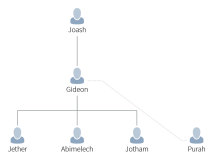
Judges 19-21

These last 3 chapters are rough!! 

Chapter 19.  A Levite and his Concubine.  This story is crystal clear and does not need a recap.  This story is parallel to Sodom in Genesis 19.  The moral deterioration of Israel is exactly as it was before.  Actually worse!  There is an unwritten law of hospitality in the Middle East that is strong BUT it should never be stronger than God’s Law.  Chapter 19 ends with the Levite chopping up her broken, raped body into 12 pieces and sends it Fed Ex to the tribes as a “call to action” for revenge.
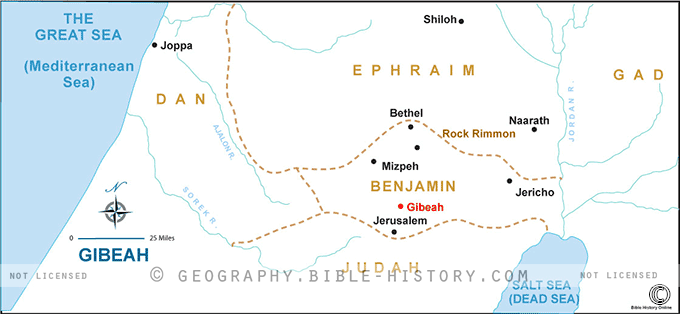
The Gibeah - Bible Maps

This horrible event occurred in Gibeah.  As you can see it happened in the land of Benjamin.   So Chapter 20 now begins a civil war when the Benjaminites side with the offenders.  I am not sure why, as you can see the “story” is already being falsely told on the Levite’s side so I assume the Gibeah side is too.  Or it could be that the Benjaminites don’t want to fight their own land.  Either way, you can see this civil war is 11 tribes against 1.  When the 11 inquire to the Lord “Who should fight first?”, the Lord sends Judah but never promises victory.  The second time they ask “should we fight them?” and the Lord says “yes”. See, the Israelites needed their discipline for fighting against their own tribe, the Benjaminites.  However, on the 3rd request, the 11 show repentance by fasting and offering a burnt offering, so this time the Lord grants them permission to fight again, promising them victory.  The Lord now will discipline the Benjaminites for siding with the offenders.

Chapter 21:  What a hot mess!!  So the men of Israel had taken an oath NOT to intermarry with the Benjaminites.  (Ummmm…God’s Law said not to intermarry with NON-Israelites)  So because of this oath, the Tribe of Benjamin will dwindle out!  Well, we know this can’t happen because we need to have the first king Saul, Queen Esther, and the apostle Paul, who were all Benjaminites.

So these Einsteins come up with a plan.

  • “Let’s find anyone who did not participate on our side in this civil war, we will kill them and their wives and just steal the virgins”.
  • What in Sam Hill!  So they did that and pocketed 400 virgins.
  • “Shoot!  We are still 200 short, what shall we do??”
  • “Oh I know….there is an annual festival in this place called Shiloh, during the festival we can hide in the bushes and the old men can each steal for themselves a woman”

ARE YOU KIDDING ME!!!  Why is there an annual festival in this little place called SHILOH?????

FreeBibleimages :: The altar of witness :: When the tribes east of ...

Can you see the magnitude of the whole scene??  Why are they not commemorating the annual feast as mandated?  Do they even know what the feasts commemorate?

So what started as avenging the rape of 1 woman, ended with the rape of 600 women and many many deaths.

And the final verse in Judges could not be more fitting to the tragic ending

 In those days Israel had no king; everyone did as they saw fit.

Judges 16-18


The Philippines rules 5 major cities: Ashdod, Ashkelon, Ekron, Gath, and Gaza.  Gaza lay on the Mediterranean coast, in the heart of the Philistine territory. It was probably a popular “Party Town”  on the coast for compromising Israelites, as well as for the pagan Philistines.

As the judge assigned to destroy the Philistines, his presence there for recreational purposes was inappropriate, to say the least. Going to Gaza also reveals Samson’s great self-confidence, since, after 20 years of judging Israel, he was undoubtedly the “most wanted man” in Philistia.

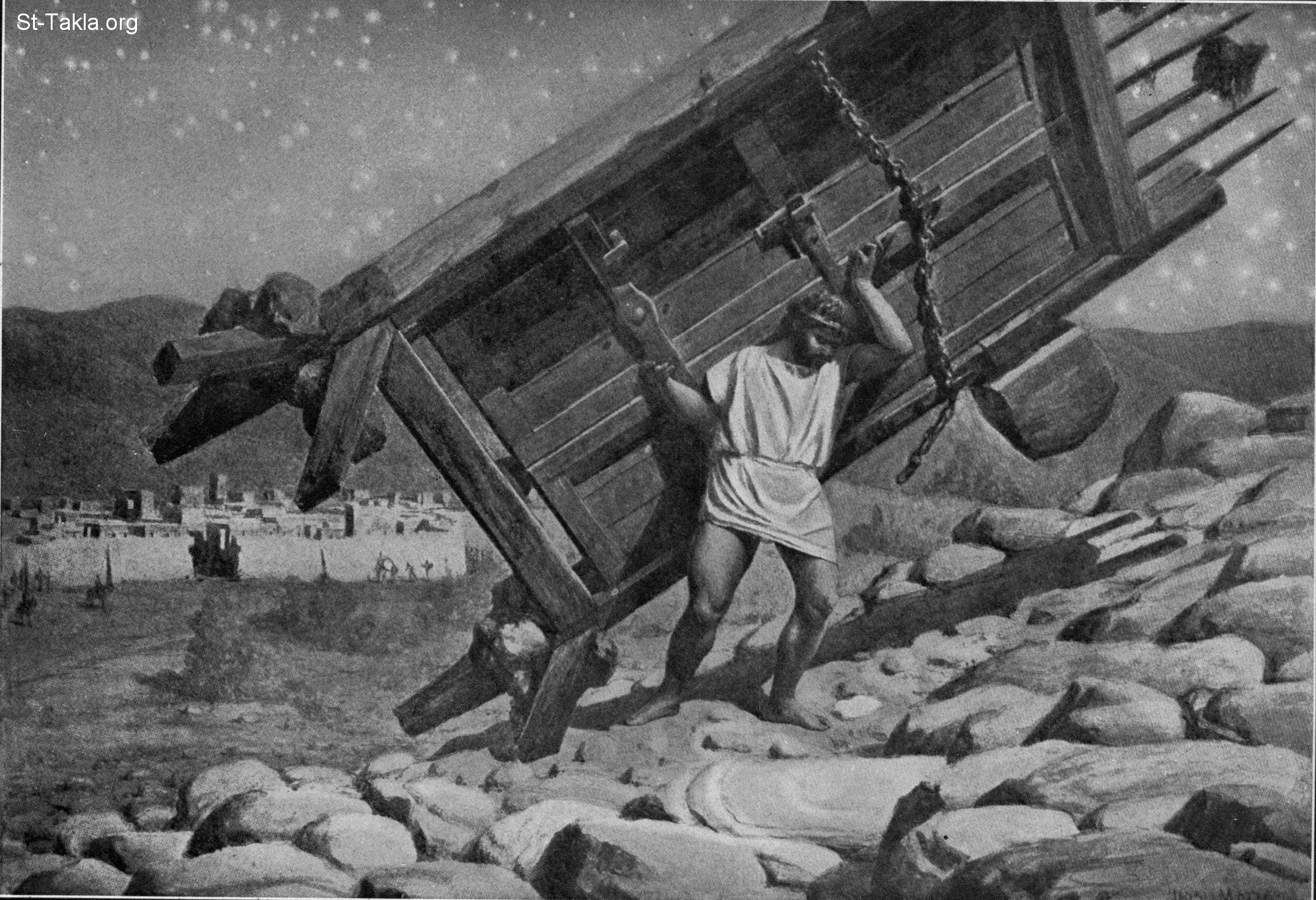
By verse 3 this has already happened!Image: b3h 30 the gates of gaza

Delilah: So the name evidently means “devoted”.  As I researched it, I came to the conclusion that her name was given to her as possibly a temple prostitute.  (the temple to the god Dagon)

Samson, now in enemy territory, posed a great threat to the Philistines! The Philistines” initiated the plan to capture him, and they offered an enormous reward to Delilah, which would have made her extremely rich.  In today’s value, they offered her about $15 million collectively.

Samson eventually gives in to her “nagging”.  (See Todd, I learned this from the Bible!). Samson’s eyes which have been the majority source of his repeated transgressions are gouged out and he is taken to Gaza and imprisoned.  (The very place he showed his strength ripping off the gates).


Verse 23: The Philistines offer a sacrifice to their God: Dagon for putting Samson into their hands. (Correction, The Lord put him in their hands for this moment).  Dagon was the chief god of the grain and harvest.  Many temples were built to worship him and often it included human sacrifice which entertained the crowds.   So everyone came to see the great Samson as a slave.  They celebrated their god was stronger (they assumed).

Samson prayed one last time:

“Sovereign Lord, remember me. Please, God, strengthen me just once more, and let me with one blow get revenge on the Philistines for my two eyes.”

Even though once again, the prayer was motivated by personal vendetta and not for the sake of God’s people, God still used him to kill more Philistines through this prayer and the death of Samson,  than when Samson was alive.


Samson was a representation of Israel.  They both:

  • were set apart by God before birth
  • they could not resist temptations
  • in times of trouble when they cried out the Lord delivered

The rest of Judges shows Israel falling to idolatry, moral decline, and petty fighting. As we read chapters 17 and 18 you need to remember what it was “supposed to look like” so that you can grasp how FAR from the Lord they are.

“Everyone did as they saw fit”. 

Micah turns out to be an idol worshiper.  After he returns the silver to his mother she decides to dedicate the silver to the Lord BUT makes an idol out of it too.  Michah even has a household shrine with an ephod and some idols.  Here is where it gets really interesting:  he hires his own Priest!

  • If you go back to Joshua 21, Bethlemham wasn’t even a Levitical city, so why was a priest there in the first place?
  • If through worship the Levites were provided for, then why does he need to find employment?
  • Is this priest a descendant from Aaron or Phineas? Is he even eligible to be a priest or is he just a Levite?  Idk?
  • The whole thing is just muddy!

Apparently, the Israelites no longer supported the priests and Levites because so few people were properly worshipping God.

Verse 17:6 “In those days Israel had no king, everyone did as they saw fit”.   

They did have a king.  The KING!!


Chapter 18: Why was the tribe of Dan looking for land?? They were given Land. Does anyone want to call in sick and break this chapter down verse by verse to see how much is wrong (how far the tribes have moved from serving the Lord).  I will!!  Reread it slowly!  Your head will explode.


They didn’t trust the Lord to conquer their own land and the Amorites had it so they went out to take land from the other tribes.  Got it!  They found a land that they liked in Laish.

The migration of Danites (Judges 18) | larshaukeland

So on their way there they come across Micah’s idols and hire his priest to be their priest.  (This is a Netflix show!)  When Micah discovers the robbery he goes after the Danites but realizes he has outnumbered and gives up.  The Danites take the land and set up the idols they had stolen to worship.

300 years have passed and we have people setting up their own religious practices.

If you think that is bad….wait until tomorrow!


IF YOU ARE STARTING TO GET CONFUSED, you aren’t.  Your head should be confused and spinning because “In those days Israel had no king, everyone did as they saw fit”.

So if you read a whole chapter and you think “that doesn’t make sense”, then that’s the point.  If you went back and reread today you will see none of it lines up with what God asked them to do.

Judges 13-15

From chapters 13 to 18, the Bible concentrates on the tribe of Dan, which had been one of the largest and most prominent tribes during the wilderness march (Num 2:25-31). In the period of the judges, however, Dan seemed helpless against the Amorites (1:34) and moved northward to find new territory.

The present 40-year oppression by the Philistines did not end until Samuel (1 Sam. 7:6).  Samson only began to deliver Israel from the … Philistines” (v. 5) At the end of his life and story, conditions in Israel were even worse than at the beginning. The Philistines will continue their oppression of the Israelites into King David’s reign. (that’s right I said “king”, right now the Lord is supposed to be King, how is that working out for them.  How is it working out for us today😢)

Chapter 13:

Samson’s birth by a “barren woman” indicated God’s supernatural provision of him for a special purpose. The meaning of Samson’s name may derive from shemesh (“sun”)  meaning “little sun”.  Samson’s mother may have named him in honor of a Canaanite god.  It also can be translated as a “strong one”.   The appearance of the Angel of the Lord (theophany) always marked a very significant event in Israel’s history. The only other birth He had announced so far was Isaac’s (Gen. 18:1). Samson would have an unusual opportunity to serve God.

Samson’s parents vowed him as a Nazirite (dedicated ‘to God’) from his birth (the womb) to the day of his death.  Normally Israelites took the Nazirite vow voluntarily and temporarily. Three laws governed the person under a Nazirite vow, in addition to the Laws written under Moses from God of course: Look back on Numbers 6:

  1.  he was to eat nothing that the grapevine produced (allowing the Holy Spirit to use him consistently). 
  2. he was to let his hair grow without ever cutting it, (public profession)
  3. and he was to refrain from contact with a dead body (Num. 6:1-21). (breaks fellowship with God)

Since he was vowed in the womb, even his mother adhered to the vow during pregnancy.

Look for ALL the clues that he broke every part of the vow.


Chapter 14:The first recorded indication of Samson’s superhuman strength is his ability to tear apart a young lion with his bare hands. Even though God strengthened him, Samson used that strength for his own purposes, not to fulfill God’s will.  After going to the vineyard, he scraped the honey out of the lion’s carcass with his hand (v. 9).  Not only did he desecrate his own body by going near a carcass, but he also desecrated his parents.  We can assume also that he drank wine since he was at a Feast.

The riddle would have been impossible for the Philistines to decode:

“Out of the eater, something to eat;
    out of the strong, something sweet.”

However, Samson’s told his fiance (not married yet) and was obligated to give the reward of the clothing.  Chapter 14 highlights Samson’s weaknesses as a human.


Chapter 15: The chapter begins by stating it was the “wheat harvest”.  When Samson returned to consummate the marriage and could not,  he used the foxes to burn down their harvest. This method of retaliation or revenge in ancient times was very serious.  The Philistines retaliated by burning the father and fiance.  Samson then goes to Etam:

Map - Etam - BibleBento.com

Samson flees to Judah territory and rather than the Israelites recognize Samson as a Judge God raised up to save them, they support the enemy!

Then three thousand men from Judah went down to the cave in the rock of Etam and said to Samson, “Don’t you realize that the Philistines are rulers over us? What have you done to us?”  Ummm, what??

He answered, “I merely did to them what they did to me.”

They said to him, “We’ve come to tie you up and hand you over to the Philistines.”

The Spirit of the Lord comes over him again and he defeats 1,000 men with a jawbone.  Samson gives credit to the Lord for his defeat and leads Israel for 20 years.

Judges 10-12

  • 2nd post (the last one had the wrong chapters in the title)- sorry. Sometimes I am too tired to proofread. 😴
  • Click here to read
  • Click here to listen
  • Good morning. So let me ask you, are you amazed at how much of the Bible we really don’t know until we actually sit down and read it like this. If we made a pie chart of all the things we put first, how small a sliver would reading your Bible be (before this read).  I am just thinking out loud as I reflect on the Lord’s forgiveness and grace for our disobedience too.

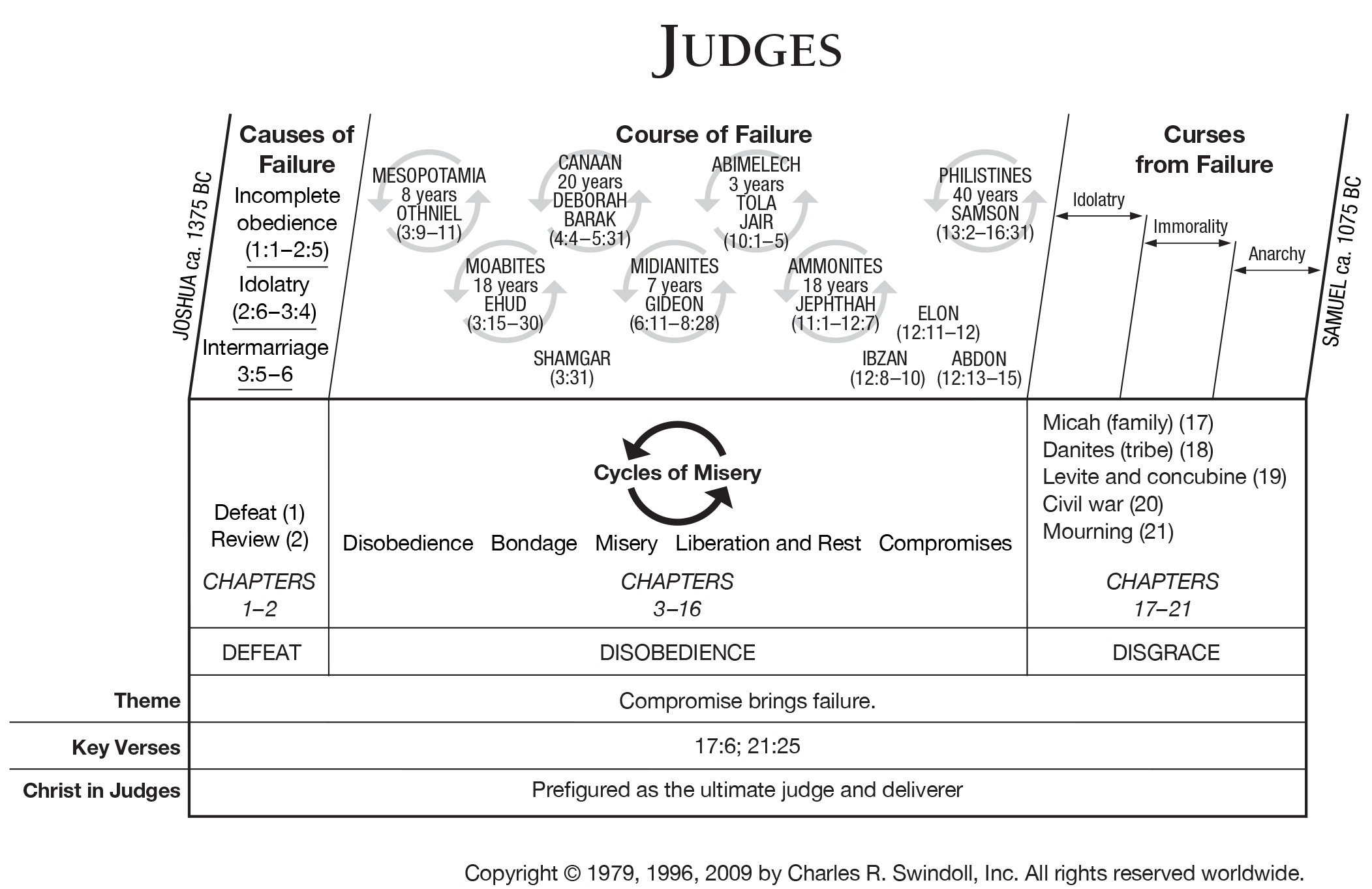
As you can see we continue to cycle.  We have read about Judges 1-5, and today we will read 6-11 all in one day. Leaving Samson for Sunday!


The Judges and their Tribes:
1. Othniel – Judah
2. Ehud – Benjamin
3. Shamgar
4. Deborah – Ephraim
5. Gideon – Manasseh
6. Tola – Issachar
7. Jair – Manasseh
8. Jephthah – Manasseh
9. Ibzan – Judah
10. Elon – Zebulun
11. Abdon – Ephraim

12. Samson – Dan (Sunday)

We have two “minor” judges Tola and Jair raised up to save Israel.  Then we have this long story about Jephthah #8.


What we are reading is not just a deterioration of the Israelites but also of the judges.  The evil the Israelites commit is clearly specified as apostasy evident in the long list of foreign gods they are worshiping as well as they have completely forsaken the Lord and no longer serve him at all. (look for details like how long or short their reign was or how their wealth accumulation is growing 😢)

They served the Baals and the Ashtoreths, and the gods of Aram, the gods of Sidon, the gods of Moab, the gods of the Ammonites and the gods of the Philistines. And because the Israelites forsook the Lord and no longer served him, he became angry with them. He sold them into the hands of the Philistines and the Ammonites, who that year shattered and crushed them. For eighteen years they oppressed all the Israelites on the east side of the Jordan in Gilead, the land of the Amorites.

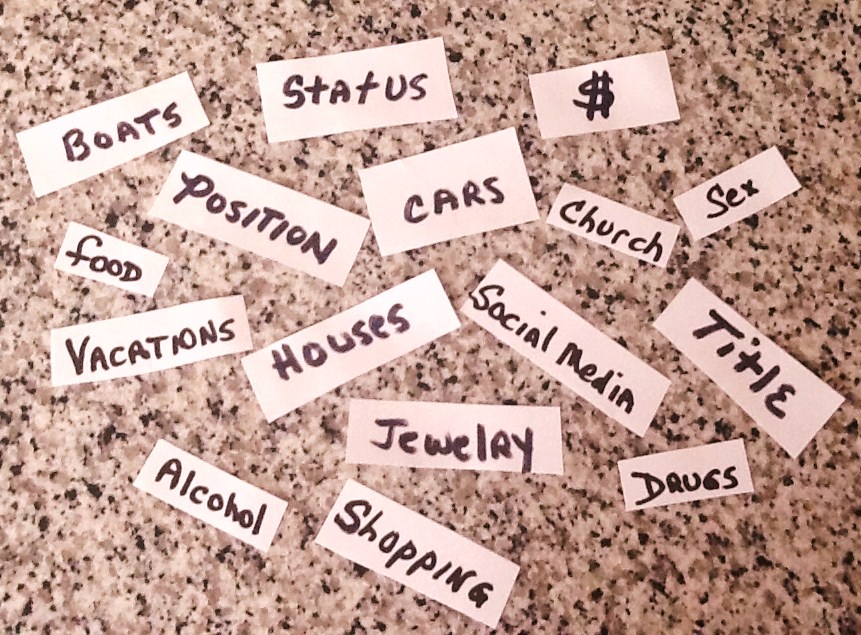
Before you shake a finger at them. What is the desire of your heart?

:Pray for America-What Are Your Idols? | Dr. Michele Burke- Esther's Warriors Ministry

This text is also setting up the scene for Samson and the Philistines.  However, this story grows as they move from the east side of the Jordan to now the west side.   The Lord initially refuses to save the people telling them to go cry to the gods they serve (ouch).  Instead of waiting for the Lord to raise up a Judge to deliver them, they enlist Jephthah.

Jephthah was half Hebrew, half Canaanite (his mother was a prostitute.)

I am not sure of you caught it, but just in case you didn’t…1The king of the Ammonites answered Jephthah’s messengers, “When Israel came up out of Egypt, they took away my land from the Arnon to the Jabbok, all the way to the Jordan. Now give it back peaceably.”

Jephthah could have just said “Liar, Liar pants on fire!” but he didn’t.  He did something better: he schooled them on their history.  Israel did not take land from the Ammonites, he took it from the Amorites!  NOW the Ammonites are trying to take what isn’t theirs.  Tsk Tsk!!

Unlike Gideon who shows doubts about his ability without the Lord’s help, Jephthah feels confident in himself and his band of hoodlums to get the job done.

Prior to this, we see Judges that show concern for the suffering of Israel, as the people deteriorated in their sins.  Jephthah’s motivation is self-interest.  He has a dialogue about the land with the Ammonite king.  He argues:

  1. When Israel came out of Egypt they did not steal land, rather the Moabites did.
  2. The land taken away from the Amorites was given from the Lord (King Sihon battle)
  3. They had the land the Lord gave them for 300 years,  He sarcastically adds we will keep the land our Lord gave us, you keep the Land your god, Chemosh,  gave you. (this god will come up again when we read about Solomon)
  4. And concluded with: “I have not wronged you, but you are doing me wrong by waging war against me. Let the Lord, the Judge, decide the dispute this day between the Israelites and the Ammonites.”

    The king of Ammon, however, paid no attention to the message Jephthah sent him.

Let the games begin!


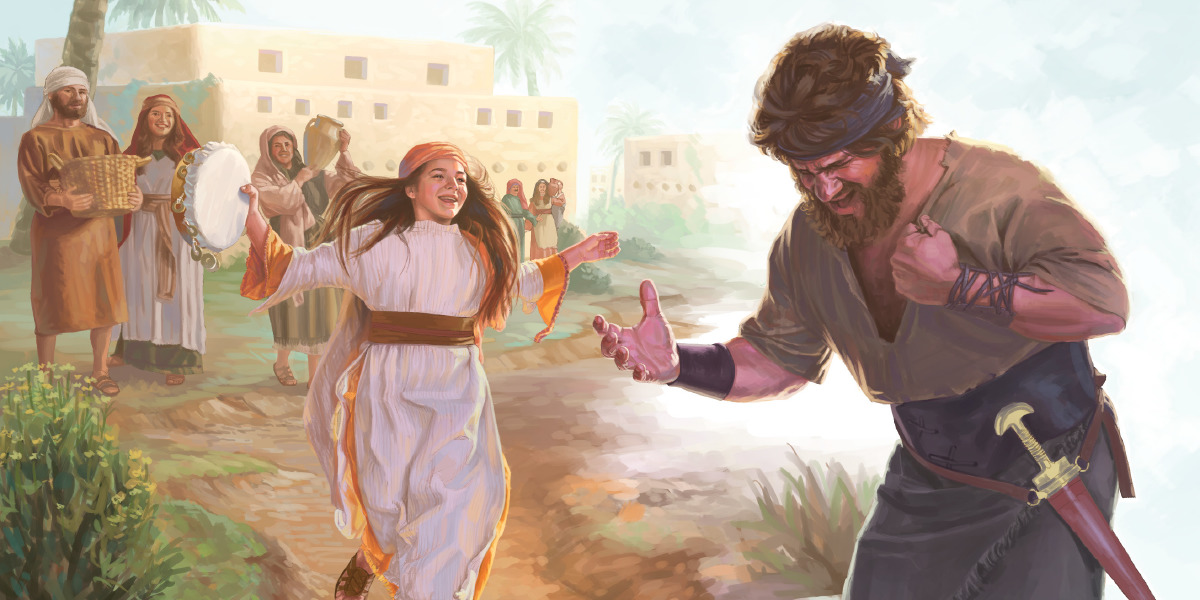
Chapter 11: When preparing for war Jephthah makes a vow with the Lord:  “If you give the Ammonites into my hands,  whatever comes out of the door of my house to meet me when I return in triumph from the Ammonites will be the Lord’s, and I will sacrifice it as a burnt offering.”

Go back, who was his mother and father?  His mother was a Canaanite, and his brothers hated him for it.

  • One of the Cannonite practices was ‘bartering’ with their god.
  • One of the Israelite commands was keeping your vow.

We see here what happens when you mix 2 religions- it’s mud.

Just like many Christians know “a little” about the Bible and OFTEN take scriptures out of context. He knows “a little” about the Law of Moses and takes it out of context.  He should have known that the Lord would never want a human sacrifice.


Chapter 12…Lord have Mercy!  AGAIN!!  The Ephraimites cross over the Jordan to complain like babies AFTER the battle, “why weren’t we asked to fight in your battle”.  This time threatening to burn down Jephthah’s house.  Gideon handled this diplomatically when it happened to him…Jephthah on the other hand, obviously not in the mood to dialogue like Gideon had, calls on the Gileadtes to fight them.  They cut off their path to escape back to the other side of the Jordan and kill 42,000 Ephraimites.

If all this is confusing with all the names just remember that the Ephraimites are ISRAELITES.  The conflicts are now internal and escalating in intensity.

Jephthah led Israel six years. Then Jephthah the Gileadite died and was buried in a town in Gilead.

It does not say ANYTHING about years of peace following this Judge.  I am thinking ‘days’ in my head.


Three Minor Judges are then listed Ibzan, Elon, and Abdon. If you have time take a moment to look back on the Printables (that you don’t need to print I keep them in the Menu at the top for you)

Sadly,  the Israelites are still in the ‘disobedience’ stage.  We haven’t even reached the ‘disgrace’ stage yet.  I wonder what stage the Lord would say the world is in today?  I wonder in his eyes what “chapter’ we resemble.  Well, let’s keep reading this week and see what happens next.


Judges 8-9

Before you read today I want to point out in Chapter 6:32 Gideon was given the name Jerub-Baal ‘let Baal contend’ when he broke down his father’s  (Joash’s) Baalm altar.  I wanted to point that out for this reading.  I am honest with you when I have skimmed in the past, so I will be honest with you and say I had to read this several times to comprehend all that was happening.

Chapter 8

Gideon had not invited the men of Ephraim to join him in the battle yesterday, instead, he recruited the tribes of Manasseh, Asher, Zebulon, and Naphtali.   So now that Ephariam sees the battle was a victory they say “awww man, I would have been a part of that!  Gideon must have read Dale Carnegie’s ‘How to Win Friends and Influence People’ since he defused the situation by complimenting them for past battles.😜

“Denying them the bread”.  The first time I read this I thought”what’s the big deal, Israelites are denied help all the time”.  What I did not catch was they had crossed the Jordan to the East and they were in Israelite territory (Transjordan tribes).  The Israelites denied feeding Israelites!

Gideon at this point for me starts to “lose his marbles’.  I can deal with the “needing affirmation” Gideon, but today we read a totally different Gideon.  In verse 18 he asks Zebah and Zalmunna “who did you kill?” and follows it with “those were my brothers, and if you had spared them I would have spared you”.  Ummmmm I don’t remember reading that when Moses and Joshua read the laws about entering the Promised Land!  Wrong on so many levels!

  1. This now becomes an execution (not a killing through battle)
  2. This becomes a “personal” vendetta rather than a defeat for the nation.
  3. Even his son, Jether, as a boy understood this was all wrong.

In Verse 22, the Israelites began to beg for someone to rule over them.  Gideon refuses telling them the Lord will rule over them BUT Gideon obviously has aspirations of being “king-like” deep down.

  1. He takes the rings off the Camel’s neck AND asked for the “rings” which a “kingly” request. (accumulating wealth)
  2. He takes MANY wives and concubines
  3. He names one of his sons (from his concubine, from Shechem) Abimelek: which means “My father is King”.

The chapter ends with Gideon creating an Ephod (what the Priests would wear on their chest under their breastplate) out of gold.  This became a snare to both Gideon and his family as something to worship.Mr Biblehead: Gideon, the Rest of the Story (Judges 7 & 8)

Gideon dies.  If you were to sum up the life of Gideon what would you say?  I would love to hear your comments because they would be so different depending on what the Lord “highlighted” for you.


Chapter 9:

A Totalitarianism Judge – Rip-Roar Get High On Life

The son Abimelek, his mother was the concubine,  had a meeting with his mom’s family and talked them into letting him be the ruler.  In order to do this, he had to eliminate his 70 brothers.  BUT the youngest brother (half-brother) Jotham “The Lord is Perfect”,  escaped and warned the Shechamites about Abimelek with a parable.

  • The trees represented the people (different statuses represented by olive trees, fig-trees, and vines.
  • The thornbush represents Abimelech.

(The parable could be against Kingship altogether)

Jotham defends Gideon, as the deliverer (as a judge).  Gideon risked his life to save the Israelites, only being repaid by the deaths of his sons.  Verse 19: “So have you acted honorably and in good faith toward Jerub-Baal and his family today? If you have, may Abimelek be your joy, and may you be his, too!  But if you have not, let fire come out from Abimelek and consume you, the citizens of Shechem and Beth Millo, and let fire come out from you, the citizens of Shechem and Beth Millo, and consume Abimelek!”


Abimelek ruled for 3 years.  Then, the Lord stirred up animosity to avenge the killing of Gideon’s 70 sons since they fell in the category above “But if you have not” Matters get worse when Gaal uses the same tactic Abimelek used earlier.  However, Abimelek’s deputy Zebul reports back to Abimelek and defeats Gaal.  War breaks out and when the Shechamites hide in a tower Abimelek burns it down,  (As Jotham said…”they were destroyed by fire”.

Abimelek continues his attacks on surrounding towns and the people in Thebez KNOW about his previous “tower fire” so they use it to lure him to the bottom of it and then a woman drops a millstone on his head…but does not kill him instantly.

52 Abimelek went to the tower and attacked it. But as he approached the entrance to the tower to set it on fire, 53 a woman dropped an upper millstone on his head and cracked his skull.

54 Hurriedly he called to his armor-bearer, “Draw your sword and kill me, so that they can’t say, ‘A woman killed him.’” So his servant ran him through, and he died. 55 When the Israelites saw that Abimelek was dead, they went home. (Insert eye roll from all the women out there)

Abimelech.Death Of.BibleOutlines | The Daily Office in Quarantine

This was a complicated read (for me), keeping the names straight was the hardest part (who is on who’s team??). It is Good Friday, so I think you most certainly can find some time to read it twice.

Trivia: What does the name: “Abimelek” mean?

I am still researching something…if I figure it out, I will put it in the comments.

Judges 6-7

I think we can all relate to Gideon.  He needs a “sign”….many signs when called to do something we feel is impossible. But more space is devoted to Gideon in the Book of Judges (100 verses) than to any other judge, and Gideon is the only judge whose personal struggles with his faith are recorded.

The Midianites were nomads that descended from the line of Abraham.  At this point, all the enemies are confusing me, so take a moment to remember some of these…look for the “ites” at the end of their names.

  • Find Ham: (the cursed son of Noah).   When you read “These were the lands of the Hittites, Amorites, Canaanites, Perizzites, Hivites and Jebusites” (often lumped together by the name the Canaanites)
  • Find the Moabites and the Ammonites (Lot’s daughters after they slept with him)
  • Find the Midianites (Abraham’s son from Keturah)

So again we fight the Midianites. It was not their strategy to kill the Israelites and take over their land, they preferred to let the Israelites sow and harvest their crops, and then steal what God’s people had labored so hard to produce!  So the Israelites had to hide their harvested crops and other valuable possessions caves and clefts of mountains.  When we meet Gideon he is threshing wheat in a cave.  Let me show you how oppressed the Israelites were:

Normally, a harvester would pick up a load of wheat and toss it into the wind in order for the lighter chaff, which was useless, to be blown away.  The chaff would then be swept up and burned, while the good grain settled into a pile. This process was winnowing the wheat.  The fact that Gideon had to do this in a winepress (lowland, no wind) so that the Midianites wouldn’t steal it,  made threshing nearly impossible.

I say all this because we are going to talk about ‘threshing’ a lot.  Example:  John speaking of Jesus in Luke 3:16:  John answered them all, “I baptize you with water. But one who is more powerful than I will come, the straps of whose sandals I am not worthy to untie. He will baptize you with the Holy Spirit and fire. 17 His winnowing fork is in his hand to clear his threshing floor and to gather the wheat into his barn, but he will burn up the chaff with unquenchable fire.”


In calling Gideon to deliver the Israelites, God revealed Himself twice. The first time, God appeared to Gideon and spoke directly to him as “Angel of the LORD” (Theophany).  The second time, God commanded Gideon to destroy the local Baal worship, and renew the worship of The Lord. In the first case, God acknowledged Gideon, and in the second, He called on Gideon to acknowledge Him.


Gideon could not understand why the Israelites were suffering as they were, “if” the Lord was “with” His people (“if the LORD is with us, why then has all this happened to us? a very common phrase still today). He failed to realize that their condition was the result of their abandoning God, not His abandoning them.


This act of tearing down the family’s pagan altar was a public confession of Gideon’s commitment to the Lord. It was necessary for him to take this stand personally before the nation would follow him as its judge. This sacrifice served a twofold purpose: First, burnt offerings of worship made atonement and symbolized the offerer’s total dedication to the Lord. Secondly, Gideon’s sacrifice was a rejection of Baal worship, since the “bull” was the sacred animal in the Baal fertility cult.

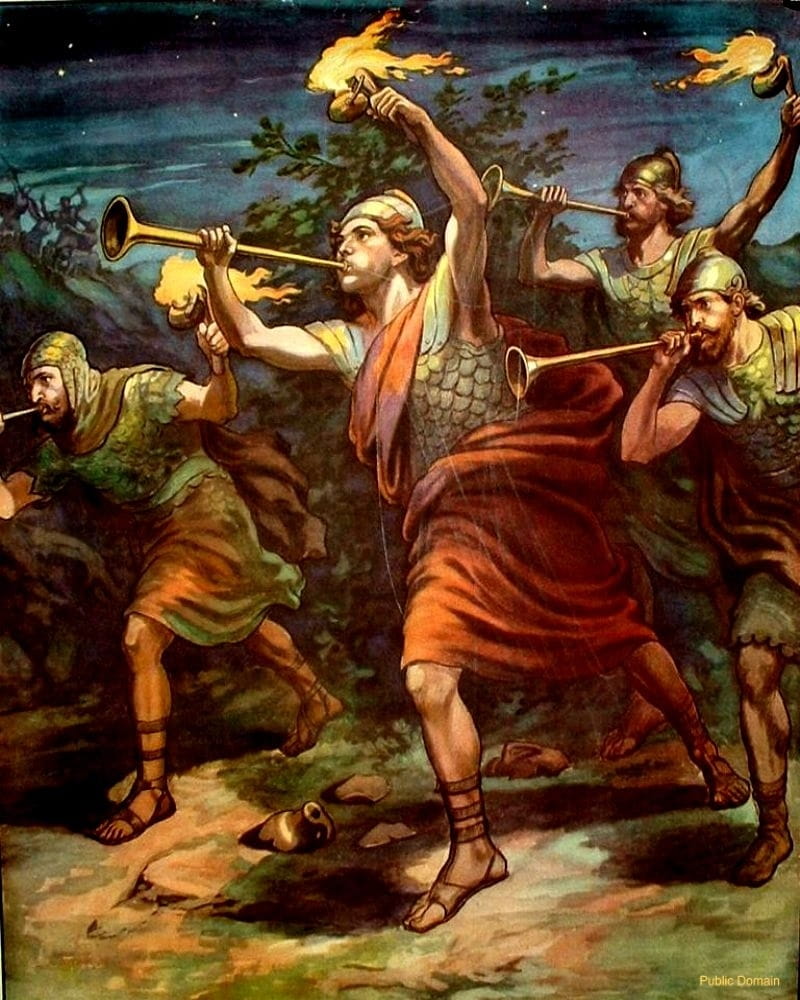
Gideon Le A Mi 300 Kong | Baibal Tuanbia | Bible images, Gideon bible,  Bible pictures

The Israelite soldiers numbered only 32,000 while the Midianites numbered 135,000 warriors. God clearly revealed His purpose in reducing Israel’s army to ONLY 300 men. He wanted everyone to recognize that the victory was His work rather than Israel’sGideon in the Bible - Scripture Quotes & SummaryIf the men were instructed to carry a horn in one hand and a lantern in the other, how could they use a weapon?  Oh, yeah, God was the ONLY weapon they needed.