Isaiah overview for tomorrow

The Major Prophets are Isaiah, Jeremiah, Ezekiel, and Daniel. (I am not sure where Lamentations fits in yet). 

Prophecy has a “Near/Far” view.  The message may be talking about something that will happen in the near future BUT the same message might also happen in the future on a grander scale.  Make sense? So with each chapter, you might say is this talking about Israel, the Messiah, or Revelation.  The answer might be:  All.


Prophets were NOT liked because they brought words of consequence due to sin and lifestyle.  But their words were from God; the Prophet was just a messenger.   So feel free to read this book in the present day as well.


Isaiah means “Jehovah Saves”, the key to the book of Isaiah is Salvation

The book of Isaiah is a masterpiece in itself.  A Bible inside the Bible.  What do I mean by that??

  • This book has 66 chapters (the Bible has 66 Books). 
  • The book is clearly divided into two sections (just like the bible). 
    • The first section is 39 Chapters (just like the Bible) Those chapters talk about the Law and Condemnation (just like the Bible)
    • The first section will begin with the people’s sin, and ends with a prophecy of the coming Messiah (just like the Old Testament).
  •  The second section opens in Chapter 40 with the very words that John the Baptist will say in the beginning of the New Testament (Yes I am not kidding). 
    • The second section has 27 chapters (just like the Bible, NT)
    • The second section will talk about Salvation, Grace, and Love (just like the Bible)
  • The book of Isaiah will end with visions of heaven and a new earth, just as we will read in Revelations. 
  • Unbelievable!
  • Isaiah is the most quoted prophet in the New Testament (22 times)
  • Jesus will literally open the book of Isaiah during his ministry and say (paraphrase)  “People, they are talking about me here!
  • This book will explain to us who Lucifer is and where he came from and why he is here (ch 14)
  • The word Salvation is used 31 times!

The Messianic prophecies are so accurate that skeptics have said “this must have been written after Jesus came.

Jewish people memorized the scriptures in order to preserve God’s word.  When the Temple is destroyed in 70 AD many of the original writings were destroyed.  Traditionalists had memorized every scripture (side note: ever see the movie Book of Eli with Denzel Washington…must see).  Anyway, they wrote with accuracy the Jewish teachings.  “We” call it the Old Testament.  This is called the Masoretic Text, which was completed in the 9th Century.  So,  someone COULD argue “How do we know THIS TEXT is accurate?”  I mean c’mon who could memorize the Bible, I struggle to memorize single scripture??

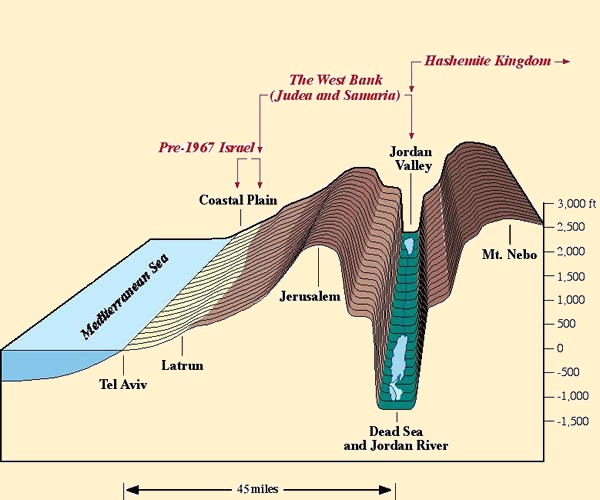
In 1947 a Bedouin shepherd discovered seven scrolls housed in jars in a cave near what is now known as the Qumran site. The Dead Sea is the lowest point on planet earth.  It is 1,388 feet below sea level (to give you perspective Death Valley California is only 282 feet below sea level). Besides the topography used as preservation (from God), the salinity of the area is so salty that nothing lives there.  Not one fish. The salt in the area/cave kept these hidden scrolls preserved!

Dead Sea - Qumran    Water Topographic Cross Section

The discovery of the Dead Sea Scrolls in the twentieth century is the defense. In a cave in Qumran, archaeologists discovered thousands of fragments of biblical manuscripts that predated the Masoretic Text.  They were pieced together and it included every book from the Hebrew Bible (except Esther).  These are the oldest surviving manuscripts of the Hebrew Bible, dating 1100 years before the Masoretic text,  and what do they tell us? The Masoretic Text is remarkably reliable.  What was different: 9 spelling words!!  So I say to the skeptics…put that in your pipe and smoke it.

So we will read the accurate words of Isaiah.  I am not going to lie: this won’t be easy.  This is a difficult book to chew on.

If you have a hot minute click here and read just the first chapter.  I read the first verse and it said a “vision”.  I immediately was excited to read it.  Here is what my warped brain said when I finished it: “If God was a news anchor today, this is what he would say to our nation”.  OH MY STARS!!
Jonah Overview

Jonah Part 1 - A Great Commission, A Great Rebellion, and A Great Mercy — Redemption Parker

When you hear the word Jonah, most of us think of the word Fish.  I am hoping after tomorrow when you hear the word Jonah anything but the word “fish” comes to mind.  Redemption, Salvation, Grace, Love, Mission…

I am going to tell you the beginning and the end: It starts with Jonah being called to the mission field.

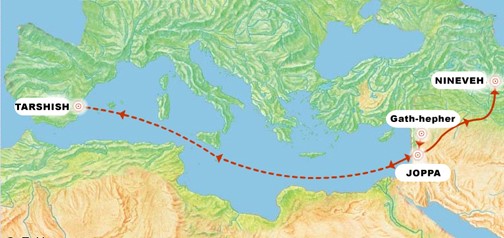
The word of the Lord came to Jonah son of Amittai: “Go to the great city of Nineveh and preach against it, because its wickedness has come up before me.”But Jonah ran away from the Lord and headed for Tarshish.

The contrast between Nineveh and Tarshish was vast. Nineveh was located east of the Tigris River in modern-day Iraq. It was more than 500 miles east of Jonah’s hometown. Tarshish, in contrast, was west of Gath-Hepher. In fact, Tarshish stood more than 2,500 miles from Israel in the opposite direction of Nineveh. It was the most remote destination available to Jonah. Jonah was trying to put as much distance as he could between himself and the Ninevites “Assyrians”. Actually between himself and God.

Walking Through the Word: Nineveh, Land of the Assyrians — Part 2 ...

You can read this story from “our” perspective or you can try to think of it from God’s perspective.  There is not one person on this Earth that God would close the door of Salvation.

For God so loved the world that he gave his one and only Son, that whoever believes in him shall not perish but have eternal life.17 For God did not send his Son into the world to condemn the world, but to save the world through him. 18 Whoever believes in him is not condemned, but whoever does not believe stands condemned already because they have not believed in the name of God’s one and only Son.

Jonah was from Gath-Hepher, a town right outside Nazareth (Jesus’ hometown).  Nineveh is the capital of Assyria. (Modern day Iraq)  The Assyrians were a huge and cruel nation.  They were warriors that built their kingdom on their pillage from other countries.  Their morals were horrible.  The Assyrian kings kept a detailed record of their conquests and made art of their brutalities to hang on their walls.  They spread complete fear throughout the land in order to keep the nations in line to collect taxes.

Archeologists have uncovered some of their documentation: here are the people of Ninevah:

  • Cut off their hands and fingers, noses, and ears.
  • Skin them alive and put their skin on the walls of the cities they conquered.
  • Cut off their heads and put them on stakes and line the roads to their city.
  • Swing babies by their ankles and crack their heads against a stone wall.
  • Formed pillars of their corpses.
  • Impaled men on stakes against their city gate.
  • Cut off their privates and carried them as tokens as an object lesson for all lands.
  • Cut off their testicles and tore out their privates like seeds
  • They skinned men alive
  • Cut out their tongues
  • Gauged out their eyes for fun
  • Dismembered their bodies
  • and then made mounds of the skulls as decorations in their empire

To name a few!

Many scholars are divided over whether this book is fiction, an allegory, a parable, or a prose poem.  However, here is the deal…do you believe God created the heavens and the earth in 6 days? Do you believe God consumed a sacrifice with fire that was soaked in water? Do you believe the words written in red that Jesus spoke?  I do.

Jesus said in Matthew 12:40 “For as Jonah was three days and three nights in the belly of a huge fish, so the Son of Man will be three days and three nights in the heart of the earth”.

I have no doubt that the story is exactly as it reads.  If God says it, it is true. If Jesus accepts the Jonah story, I accept the Jonah story.

So a quick summary of what you are about to read. Jonah gets “called” to Nineveh, this cruel horrible city to denounce the wickedness of the people.  Jonah says, No and gets on a boat and heads in the opposite direction.

Why?

  • Is he afraid of these awful people?
  • Thinks what’s the point, they won’t change anyway?
  • If God’s own Chosen People won’t choose God and repent, why would these people?

NO that is not why he goes the other way!!! He goes the other way because he KNOWS God and He knows that if he is sending him on a mission then He is at work! And they probably will repent and be forgiven and he does not want that.  Jonah hates the Assyrians.  Spoiler alert:  At the end of the book Jonah admits WHY he did not want to go:

 I knew that you are a gracious and compassionate God, slow to anger and abounding in love, a God who relents from sending calamity.

This story is NOT about a fish, it is about God’s Love.  God’s Mercy.  God’s Grace.  His love extends to the whole world, even the worst people in the world. (Thank Heavens for me!!)

Prophets Overview

I wasn’t planning on doing a Prophets Overview, just an overview of each Prophet book, but as I started researching I found it so interesting so I thought I would share.  A few years ago I really didn’t know much about the Prophet books so I assumed they were about “predicting the future”.  Well, that is not true.

Prophecy is a message from God, and a Prophet is a person who delivers the message.  There are 17 Prophecy books.  That does not mean there were only 17 Prophets.  Actually,  there have been hundreds. Originally the term prophet was used for military and judicial leadership, for example, Moses and Deborah.  Then it was used by people who heard directly from the Lord, like Samuel.  During the Monarchy they became advisers to the Kings (like Nathan to David), and now have been reading about prophets like Elijah and Obadiah.

So there are 2 Categories of Prophets

  • Major Prophets
  • Minor Prophets.

What is the difference? One is major and the other is minor!  (Just Kidding).  It has NOTHING to do with importance (which I thought) it has to do with SIZE of the book.  The minor books may be short but POWERFUL!  SO don’t get up into Heaven and try to meet the Major Prophets first and snub the Minors.  They are equal in the importance of the message.  God’s word is Sovereign, Supreme, and Ultimate regardless of the length of the message.

The period of the prophets in the recorded books (17 in the Bible) covers about 500 years which were the Dark Ages of God’s Chosen people.  The prophets were men whom God raised up during the dark days of Israel’s history.    The prophet’s job was to deal with moral and religious problems and disobedience.  Sometimes a prophet would speak of the judgment of current sin and sometimes he would speak of the future if that was the message God gave him to speak. The message of the Bible is timeless and just as applicable today as it was the day it was written. (God knew what He was writing) So are these books relevant today??

  • They are the message of God
  • Written through real-life experience
  • Speaks of human nature
  • Addresses sin

Uhhhh I would say Yes!  The Prophecy books take up the same amount of “space” in the Bible as the New Testament.  I would say God thinks of them as pretty important.

So in conclusion, we know the Babylonian Exile  (captivity) is coming up,  so the Prophets can be divided into 3 categories:

  1. Pre-captivity,
  2. during captivity,
  3. and after captivity

We would also divide them as to who the Prophet is addressing.

So the Prophets BEFORE the exile in Chronological order are Obadiah (we just read that), Joel, Jonah (cannot wait for the Big fish Big God story) Amos, Hosea, Isaiah, Micah, Nahum, Habakkuk, Zephaniah, and Jeremiah (not the bullfrog).

The Prophets DURING the exile (or captivity in Babylon) are Ezekiel and Daniel.

The Prophets AFTER the return are Haggai, Zachariah,  and Malachi.

The Prophets were fearless men who denounced the sins of their day. We are judged individually and collectively as a nation.  That’s a scary thought, isn’t it?

If you would like a handout…here you go.  ✅

Posting an overview on Jonah tonight!   Stay tuned,


Obadiah Overview for tomorrow

  • Fun Fact: Obadiah, the shortest book in the Bible.
  • Obadiah means ‘servant of the Lord’.
  • Obadiah was speaking of the doom of Edom.

So who are the people of Edom? When did the “fighting” begin between the Edomites and the Israelites? Actually Genesis 25:19-

“Isaac prayed to the Lord on behalf of his wife, because she was childless. The Lord answered his prayer, and his wife Rebekah became pregnant. 22 The babies jostled each other within her, and she said, “Why is this happening to me?” 

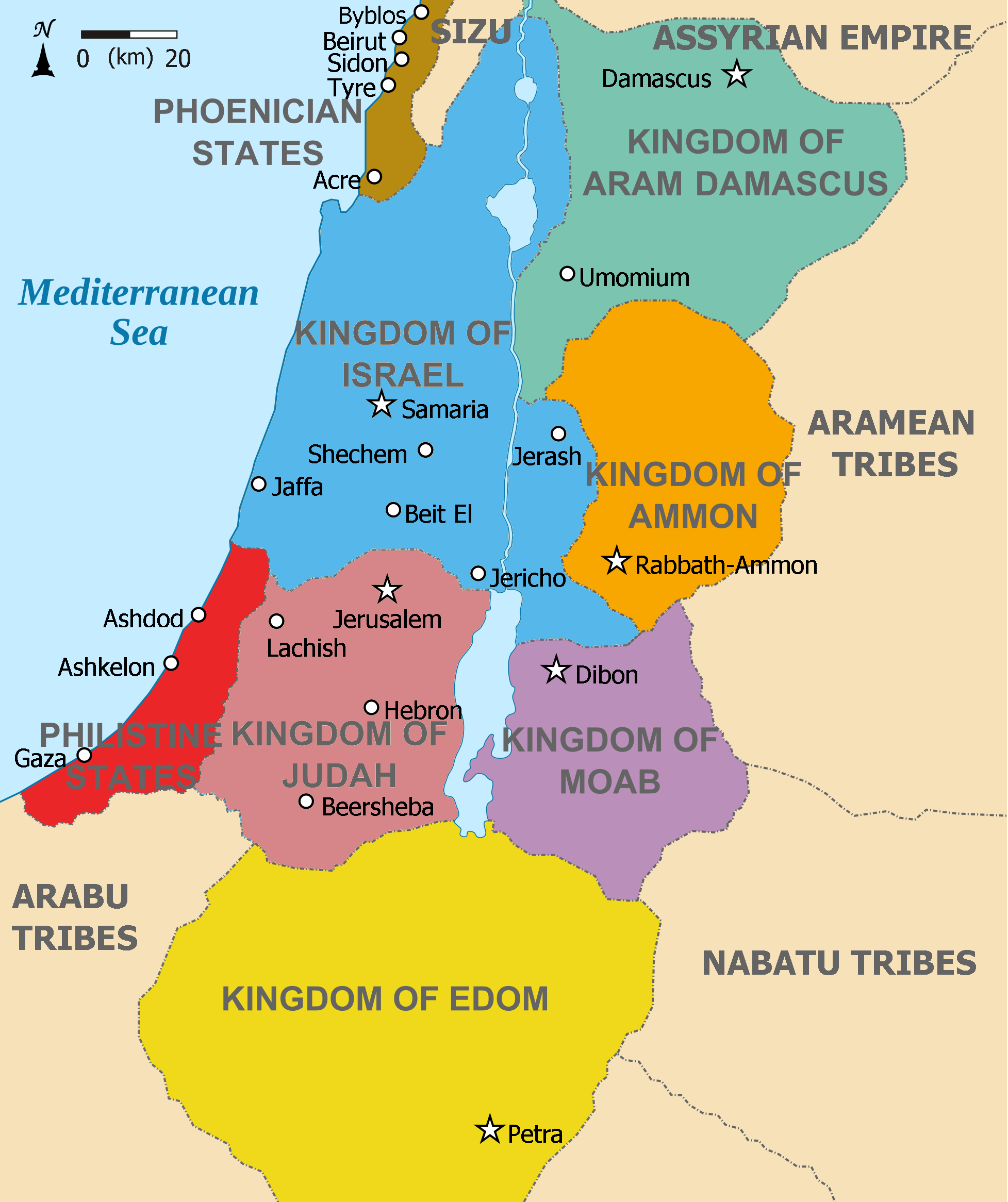
Ever since they shared a womb! The people of Edom were the descendants of Esau.  Esau (Edomites) and Jacob (Israelites).   The Edomites never passed up an opportunity to attack or invade God’s people.  This 21 verse book will predict that the Edomites will be destroyed forever.  And so it has been.  There are two themes in this short book:  Justice and Pride.

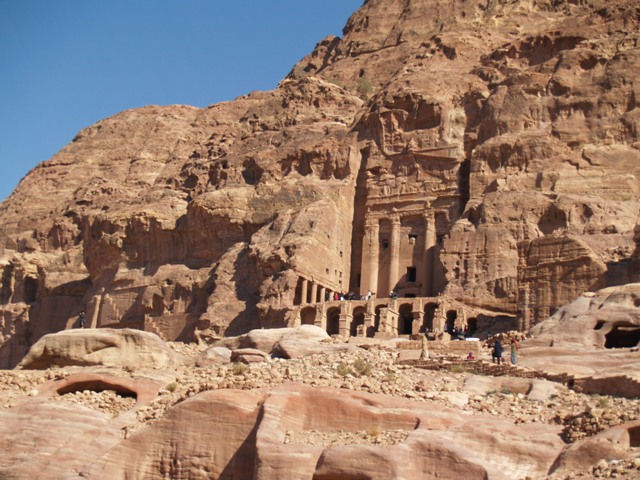
As we just read the Psalms and Proverbs we recall that God countlessly reminds us that He will eventually bring justice, in His timing.  As far as pride, the capital of Edom was Petra.  Petra was a rocky mountainside just south of the dead sea.

Dinhabah - Wikipedia

The Edomites would attack enemies and then retreat to this city that was virtually impregnable (I like using that word…makes me sound smart 🙂 ) because of its topography.  Built on the cliff of a Red mountain (I find it ironic that it was red because Esau in Hebrew meant “red”.) So they were very confident and prideful that they could attack any nation and never be attacked back.  Here is a picture of Petra.  The Book of Obadiah, a message from the Lord addressed to them to pronounce their destruction once and for all.

Petra

Meyers Study Bible Obadiah

Ecclesiastes Overview for tomorrow

Ecclesiastes in Hebrew means Koheleth “to bring together” “to assemble” but the Greek translation is Qoheleth meaning Teacher, Preacher, Speaker, or Philosopher.  This book was written by Solomon about 1000 years before Christ.  The theme of this book is going to be very human to us:  What is the meaning of Life? What is the point of living? Is this all there is to Life?

Ecclesiastes may seem quite pessimistic at first, the word Meaningless comes up 37 times in only 12 Chapters.  There are 5 ‘Wisdom’ books in the Bible and we are about the read the last of them.

  • Job
  • Psalms
  • Proverbs
  • Song of Songs
  • Ecclesiastes.

If you have been to college you may have taken Philosophy as a course.  Philosophers are divided over the Meaning of Life.  Oh how they go round and round like it is an unsolvable question.  This book refers to Our time on this earth as “Life under the Sun”.

Here is what the author is writing about: Apart from God what is life about?  The author writes this book from experience.  He tries to find joy, satisfaction, meaning but without the Lord.  He tried science, philosophy, drinking, possessions, wealth, music, materialism, fatalism (predetermined), and Religion (legalism).

The book does not condemn any of those concepts as a part of life but to recognize that those without God will leave us feeling meaningless.  Human effort will never complete us.


  • Chapters 1-4 is Solomon’s Search
  • Chapters 5-10 is Solomon’s Sayings
  • Chapters 11-12 is Solomon’s Solution

I am extremely excited to read this Book of Wisdom.  I just know that when I am done with these 12 Chapters I will be changed.

Proverbs Overview for tomorrow

New Book tomorrow!!! EASY SPOT TO JUMP IN!

I feel like we are in hyper-speed compared to the days of Leviticus!

Proverbs!!

  • Psalms were about our relationship with God.
  • Proverbs is about our relationship with people.

  • Psalms were about our private life.
  • Proverbs is about our public life.

Months ago I said there were 5 Poetic or Wisdom books- I scratched off the ones we have read already

  1. Job
  2. Psalms
  3. Proverbs
  4. Ecclesiastes
  5. Song of Songs

We know that Solomon wrote over 3000 proverbs.   A proverb is like a “short saying based on a long experience”.  They are designed for teaching purposes.  The Hebrew word for Wisdom is Chokhmah-meaning “to be skilled at”.  The deal is we can all sit here and absorb all 66 books of the Bible, but putting it into application brings Wisdom.

The word WISE or WISDOM is used in Proverbs 125 times!!  Not just applying any wisdom…applying God’s wisdom

The Proverbs can be split into 3 “P”s.

  • Principles:1-9 the word “my son” is used 10 times so we can conclude this is written for the “young” to learn
  • Proverbs: 10-24 righteous verse wicked
  • Precepts:25-29 completed works possibly from other writers
  • (I don’t have them in a category) but then we have Proverbs 30-31 written by Agur and King Lemuel.

The Proverbs will talk about: scoffers (I know a few),  friends, fools, wise men, righteousness, fear of God, knowledge, morality, chastity, diligence, self-control, trust in God, proper use of money, consideration to the poor, control of the tongue (I can skip that one, I am good 😂), kindness towards enemies, choice of relationships, raising children, honesty, laziness, justice, common sense…and others. (Need advice from God on ANY of those?)

This Book is NOT to be read.  This book is to be APPLIED.   There are 31 Proverbs; I read somewhere that one should be read each day for a month

So for about a week, you will read THREE chapters a day.  Easy to remember.

Jun 3: Prov 1-3
Jun 4: Prov 4-6
Jun 5: Prov 7-9
Jun 6: Prov 10-12
Jun 7: Prov 13-15
Jun 8: Prov 16-18
Jun 9: Prov 19-21
Jun 10: Prov 22-24

and then we will hop back into Kings for a bit:

Jun 11: 1King 5-6; 2Chron 2-3
Jun 12: 1King 7; 2Chron 4
Jun 13: 1King 8; 2Chron 5

Solomon (also called Song of Songs) Overview

Song of Songs: Advice on Love from Solomon - Sermon Series & Sermon Graphics - Ministry Pass

I am sorry this wasn’t posted earlier…New Book Tomorrow!  I call it Song of Songs, some call it Solomon.

There is much debate over this book.  Actually, when the council of Jamnia in 90 A.D. was affirming the Old Testament books as inspired by God they questioned 5 of them:

  1. The book of Esther does not contain the name God at all
  2. Some passages in Proverbs appeared controversial (hmm wonder if it was 31..haha, just kidding, a little!)
  3. Ezekiel chapters 40-48 appears to conflict with Moses Law
  4. Ecclesiastes was too pessimistic
  5. Song of Solomon for its sexual nature

Song of Songs: Think about the name, it is like the saying: the King of Kings or the best of the best!  Solomon wrote 1,005 songs and this is the one that God chose to put in the Bible as the “best”.   This book can be read as an allegory of God’s love for His church. It can also be read as poetic drama explaining:

  1. Engagement (1:1-3:5)
  2. Wedding (including the wedding night) 3:6-5:1
  3. Marriage (5:2-8:14)

(Some say it is both.)

This book is about Sex, Love, Commitment, Beauty, and Problems.

There are 3 Characters in this book.

  • Beloved (Shulamite girl)
  • Lover (Solomon)
  • Friends (Friends)

This Poem was written probably while Solomon was still young.  He fell in love with the most beautiful woman in the land (in his eyes).   Some say it is Abishag the Shulammite (the woman who cared for David on his deathbed),  but we truly do not know.

Solomon eventually will have over 700 wives and 300 concubines. (Bless their hearts). But we assume this poem is about his first wedding.

Poetry is a language of imagery, using similes and metaphors.  I will post a blog tomorrow trying to break down some of them, but if you don’t need it-just go on with your day.   I will be reading in NIV (creature of habit), but just like we did for Job, feel free to pick another version if you think it might help.  I am not strong on poetry and I make no bones about it.

1 Kings Overview for tomorrow

Athey Creek Christian Fellowship | 1 Kings

Just like the 1st and 2nd Samuel books and  1st and 2nd Chronicles were originally one book, so were 1st and 2nd KIngs (separated during its translation).  1 Kings will pick up chronologically right where we left off (always a little overlap).  We are not sure who wrote the books of Kings but Jewish tradition credits Jeremiah as the person God used to pen these books.  The book is called Kings because we will read about 40 monarchs between the two books.

We are reading the Bible in chronological order so that we can see God’s full plan of Salvation from a historical perspective.  Therefore, we will continue to weave other books in as needed to keep the timeline of history flowing.  In the month of June, we will read:


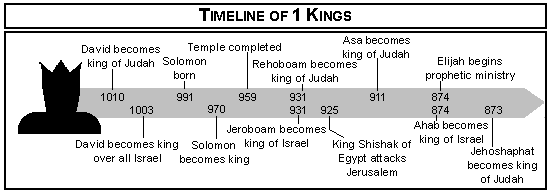
The historical period of 1 and 2 Kings totals about 413 years.  Look at the timeline above.  King David dies and his son Solomon will become King.   Still looking at the timeline above, focus in on year 931BC.  Rehoboam becomes king if Judah and Jeroboam become king of Israel.  We went from a Theocracy (God is King), to a Monarchy (1 human king) and now we are headed to a DIVIDED Kingdom.

Before we jump in, it is important to revisit Deuteronomy 17: The Laws concerning the Kings:

The King must:

  1. He must be the one the Lord chooses
  2. He must not multiply his horses for military purposes (build riches)
  3. He must not acquire many wives
  4. He must make a copy of the Law and have it with him at all times.  He will read it every day.

As David dies, the kingship will go to Solomon (just as the Lord chose).  How will he do on #2, #3, and #4??

Do you have this handout? | Bible timeline, Understanding the ...

Take a minute to look now at this timeline. Review each section in your head.  (I love this one and recommend you print it.  Click here)

The books of Kings and Chronicles show how each decision in Israel’s history had a corresponding effect on the nation. We will start off with a stable united kingdom and end with total collapse and mass deportation to Babylon.  Some parts of these books might seem dry at times but as far as World History these are two of the most important books we have in the world.

Behind? It happens!

Life gets so busy.  In the short moments that we are not busy we just ‘veg’ out!  I GET IT!

We just read about King David.  What happens after King David??  Well, most people don’t know.  Look at the timeline below.  Many of us can look at it and explain the TOP half of the timeline, but not so much the bottom 🤠).

Do you have this handout? | Bible timeline, Understanding the ...

So you have two options:

  1.  Don’t jump in because you feel like you are “missing” parts of it.  (That’s just not an option, God’s Word meets us where we are anyway)
  2. Jump in right here!

Hmmm, I wonder which one you should choose??  Click here if you need to print a schedule.


The Overview for 1 Kings will be posted in about an hour or two.

1 Chronicles Overview for tomorrow 🤪

We just started 2 Samuel but we are going to read the Chronicles along with it (and weave in the Psalms).  It all fits together.  The other day someone texted me “Who wrote 2 Samuel?”  I texted back “God”.  Not sure he found me as funny as I find myself. 😂  So to answer who wrote Chronicles, many people say Ezra.  The Chronicles are a range of records and sources pulled together for historical purposes.  For Geeks like me, it is a dream to read!

A chronicler compiles this information and writes a book less about what is actually happening but more about the meaning of the events.  God’s interpretation.  Not interpretation as we think of it today,  like a point of view.  All of the Bible is approved by God.

  All Scripture is God-breathed and is useful for teaching, rebuking, correcting and training in righteousness, so that the man of God may be thoroughly equipped for every good work. (2 Tim 3:16)

The Chronicles,  like the Samuels,  were one continuous book, but Greek translators divided it.  Originally called Dibre Hayyamin meaning “Events of the Days”.  The theme of the book revolves around Covenant.

Did the Israelites still fit into God’s Plan?  Times were difficult and dark.  Could our Messiah come from the Line of David? 

The Chronicles will talk about true worship and true kingship in the line of David.  The chronicler actually wrote:

  • 1 Chronicles
  • 2 Chronicles
  •  Ezra
  • Nehemiah

1 Chronicles is the history of the Jewish Nation.

2 Chronicles is a book of great revival.

1 Chronicles is not a book you will hear many people reading casually or even studying.  However, it is a book of great importance.  The first 9 Chapters are an extensive genealogy!  Yes, you read that correctly.  If you have been reading since January you are going to be filled with joy when you read it and actually understand it!!  If you have jumped in late I promise to make this as painless as possible with lots of great visuals.

These genealogies will give us an overview of God’s work from creation to the return after the Babylonian captivity. If you don’t know what the captivity is…you will have to keep reading….😜. The Hebrews (that term will change to Jews after the captivity) place great importance on their heritage because they needed to prove they were a descendant of Abraham, the father of the Jewish nation.

So tomorrow we will begin with chapters 1 and 2 of 1 Chronicles.  If you want to take a peek at them you can.  I really hope you see chapters like this are readable, where maybe in the past you were like “who in the world understands this stuff??”.  YOU DO NOW!