2 Chronicles 6-7 and Psalm 136

Very similar to the read from yesterday so I will keep this brief.  Solomon’s prayer is one of the most important prayers in the Old Testament.  In his prayer, Solomon explained the significance of God coming to dwell in His temple. God had come to empower, to have fellowship, and to judge, if necessary.  God was present among His people, and He would hear their prayers when they obediently called out to Him.

Solomon specified seven specific situations in which he asked the Lord to intervene in answer to prayer.

  1. when the people swore an oath in the temple (v. 22-23)
  2. suffered defeat and exile from an enemy (v. 24-25)
  3. lacked rain (v. 26-27)
  4. when they experienced disease or other disasters (v. 28-31)
  5. when foreigners would come to pray toward the temple (v. 32-33)
  6. when Israel was at war (v. 34-35)
  7. when Israel was in captivity due to sin (v. 36-39).

How is this applicable today?  Dear Lord…Please intervene when…

  1. when we make an oath in church(v. 22-23)
  2. suffered defeat from an enemy (v. 24-25)
  3. lacked rain (needs) (v. 26-27)
  4. when we experience disease or other disasters (v. 28-31)
  5. when lost people come to pray for you (v. 32-33)
  6. when we are at war (v. 34-35)
  7. when America will be defeated by our enemeies due to sin (v. 36-39).

The biggest difference between the 2 prayers is the insert from Psalm 132 into the prayer:

40 “Now, my God, may your eyes be open and your ears attentive to the prayers offered in this place.

41 “Now arise, Lord God, and come to your resting place,
you and the ark of your might.
May your priests, Lord God, be clothed with salvation,
may your faithful people rejoice in your goodness.
42 Lord God, do not reject your anointed one.
Remember the great love promised to David your servant.”


You know me by now, I see the “If” and I KNOW this can’t be good!!!

Chapter 7 ends with:

19 “But if you turn away and forsake the decrees and commands I have given you and go off to serve other gods and worship them, 20 then I will uproot Israel from my land, which I have given them, and will reject this temple I have consecrated for my Name. I will make it a byword and an object of ridicule among all peoples. 21 This temple will become a heap of rubble. All who pass by will be appalled and say, ‘Why has the Lord done such a thing to this land and to this temple?’ 22 People will answer, ‘Because they have forsaken the Lord, the God of their ancestors, who brought them out of Egypt, and have embraced other gods, worshiping and serving them—that is why he brought all this disaster on them.’”

Listen, if I get started on this topic, this post will be longer than the Bible.  If this is your first time reading- SPOILER ALERT- It WILL happen.


Don’t forget to read the Psalm, if I hadn’t posted the song yesterday…I would have totally posted it today.

His love endures forever.

Mercy, or loyal love, is one of the most prominent attributes of God’s character. By His very nature, He shows unstoppable, limitless, everlasting mercy, even to those who don’t deserve it.

“Who is a God like you, who pardons sin and forgives the transgression of the remnant of his inheritance? You do not stay angry forever but delight to show mercy” (Micah 7:18).

1 Kings 8 and 2 Chronicles 5

1 Kings 8:

In the first paragraph you can establish the Who, What, Where, When, (we get to the Why later).

Then King Solomon summoned into his presence at Jerusalem the elders of Israel, all the heads of the tribes and the chiefs of the Israelite families, to bring up the ark of the Lord’s covenant from Zion, the City of David. All the Israelites came together to King Solomon at the time of the festival in the month of Ethanim, the seventh month.

The WHEN is so cool.  This is a HUGE moment and Solomon chose the month of Ethamin, the seventh month.   Ethamin means “ever-flowing streams,” “enduring” “strong” “everlasting” The name of the month gets changed after the captivity to Tishri or Tishrei. The word “Tishrei” comes from the Syrian “tishrin,” and it means “beginning” or “commencement”.  How fitting for this moment (little geeky info for you).

What do you see? The Feast of Tabernacles. This was one of the feasts that the Mosaic Law specified that all Israelite males must attend (Lev. 23:33-36). This feast was a commemoration of the Lord’s faithfulness during the wilderness wanderings. It looked back to their slavery in Egypt and forward to their Promised Land. The bringing of the ark into the temple symbolized the fulfillment of that hope. Solomon waited for this feast in order to celebrate the dedication of the temple. This festival would bring everyone to the tabernacle (now the temple) to celebrate all week. This is a fantastic day with a spectacular crowd to see the dedication of the temple as the Glory of God fills it.

The ark has been in the Tabernacle this whole time at the house of Obed-edom.  David brought it there after the Philistines had captured it and returned it (2 Sam. 6:17).  The Levites properly brought the Ark into the Temple.

When did Jerusalem become the Capital of Israel? - Ancient Questions

“When the priests withdrew from the Holy Place, the cloud filled the temple of the Lord. And the priests could not perform their service because of the cloud, for the glory of the Lord filled his temple.”

The “shekinah” cloud, means “to dwell”.  It symbolized his presence among the people.  The same word was used when he filled the tabernacle in Exodus 40.

Solomon addressed the people regarding his father’s heart wanting to build the temple, but he was not allowed since he was a king of war, not peace.  God raised up Solomon to do that, as He had promised. He has a large crowd for the festival and he is restating the Davidic Covenant BUT I am also thinking he is letting them know he is king.  A king takes his rightful place after his throne is built (we read about that yesterday):


Solomon’s Prayer was AMAZING!!!  It is the longest prayer in the Bible.  It begins with:

Lord, the God of Israel, there is no God like you in heaven above or on earth below—you who keep your covenant of love with your servants who continue wholeheartedly in your way.

He did not confuse God’s presence with God Himself. (I think we need to think about that in our own lives)

27 “But will God really dwell on earth? The heavens, even the highest heaven, cannot contain you. How much less this temple I have built!

When Solomon prayed his requests were specific.  In Leviticus and Deuteronomy God spoke of Blessing if they followed the law and consequences for disobedience. Solomon specifically addressed each consequence in his prayer.  However, he uses the word WHEN not If.  (Must be the Wisdom speaking)

7 Petitions:

  • When anyone wrongs their neighbor…judge between the innocent and the guilty
  • When your people are defeated, sin, turn their back to you…forgive them
  • When there is a drought…teach them what is right
  • When there is a famine, plague, natural disasters….know their hearts when they call out
  • When a foreigner comes to you (Gentiles)…may all the people know you
  • When we go to war…uphold the cause of your people
  • My favorite: 46 “When they sin against you—for there is no one who does not sin—and you become angry with them and give them over to their enemies, who take them captive to their own lands, far away or near; ….(and when they repent)…forgive them and bring them back.

2 Chronicles:

After reading Chronicles, I thought: “If Chris Tomlin was the entertainment for the Festival, what would the encore song be”.  I know you thought about it too!!


1 Kings 7, 2 Chronicles 4

Extra Credit Question at the bottom

So the pinnacle of Solomon’s reign was the Temple.  However, after the 7-year construction of the Temple, Solomon decided to build his Palace which was so massive it took 13 years.  We already saw the offerings and donations that funded the Temple.  Now, who is going to pay for the Palace??  Hmmmm.  This might become an issue.  Money always is.  In the meantime, let’s compare the two.

Solomon's Temple vs. Palace | Quick view bible, Bible knowledge ...


Here is a great visual so that you can see size difference between the Temple and the Palace. 😭


Solomon's Palace Model | The Temple. View from the northeast ...


Extra Credit Question:  One of the pictures has a compass rose on it.

  1. What direction was the entrance of the Temple?
  2. Why did it face that direction? (Two possible good answers here: 1 from our discussions the other from the video yesterday)

For those not in a first-time read-through: Extra extra credit– how is the funding of the palace going to bite the Hebrews in the butt?  (Very theological wording 😂😂)

1 Kings 5-6, 2 Chron 2-3

Quick recap: David wanted to build a permanent structure for the Lord.  God’s dwelling place was currently in Gibeon and the construction was a Tabernacle, make of wood, cloth, and animal skins so that it could travel with the Israelites.  The blueprint for construction was given to Moses directly from God.  However, God said he would choose the place where his Temple would be established.  Mount Moriah was the very place Abraham was going to sacrifice Isaac and a substitute was offered to save his life.  This spot was the Gospel from the very beginning.  David purchased this land, which is a threshing floor (a threshing floor is where farmers separated the wheat from the chaff), a perfect visual of the Gospel: separating the saved from the lost.

God told David he had blood on his hands and could not be the one to build the Temple BUT the son I (God) anointed King, will be a King of Peace,  and he will build the Temple: Solomon.  David, in the meantime, spent the rest of his days gathering resources for Temple Construction.


2 Chronicles 5:

“The temple I am going to build will be great, because our God is greater than all other gods. But who is able to build a temple for him, since the heavens, even the highest heavens, cannot contain him? Who then am I to build a temple for him, except as a place to burn sacrifices before him?”

Watch this video so that you can visualize the Temple.  But before you do here are some facts:

  • The labor force: 186,000 
    • 30,000 men workers (in 10,000 at a time rotations)
    • 70,000 laborers
    • 80,000 stone cutters
    • 3,600 foreman
  • The Temple Blueprint was the Tabernacle- enlarged
  • The size was doubled (15ft by 45ft TO 30ft by 90ft)
  • Height was tripled (15 ft to 45 ft)
    • The next temple will be larger (what do I mean next Temple?? What happens to this one?? You will have to read to find out)
  • The materials for the structure was (today’s value) were $11,000,000 (that’s million!)
  • It was 2700 sq ft (about the size of a home these days)
    • that’s $4,000 per sq foot
  • Later we will read about furnishings and such (instruments, courtyards, pillars, priest clothes) $$$ The TOTAL to build this Temple is $140,381,000,000 (that’s BILLION!)
  • Took 7 1/2 years to complete

“The temple I am going to build will be great, because our God is greater than all other gods.


OK, now you can watch video:

Click here for a short visual Video

OR

Click here: Here is a video with an EXCELLENT description!  (Brew some coffee and watch this if you have time)


That’s all I planned on posting but if you wanted more feel free to read on.

Extra Information:

Hiram reigned from about 980-947.  His reign overlapped David’s by about nine years and Solomon’s by about 24.  Tyre was an important Mediterranean seaport in Phoenicia north of Israel. Sidon, another, more important Phoenician port city at this time, stood a few miles north of Tyre.

Tyre and Sidon (With images) | Bible mapping, Bible, Daily bible study

The fact that Hiram cooperated with and even acknowledged the Lord (v. 7) shows how God brought blessing to Gentiles as well as to the Israelites through David and Solomon. The treaty between Israel and Phoenicia resulted in peace for many years.

Proverbs 16:7 said:

When the Lord takes pleasure in anyone’s way,
    he causes their enemies to make peace with them.


When you read Chronicles REMEMBER the purpose of it and that it was written from a Priest perspective. 😁

Proverbs 22-24

So here we are… the third section of Proverbs!  Today just might be your favorite all-time read so far this year!


Sections
The value of wisdom 1:1—9:18
The examples of wisdom 10:1—22:16
The application of wisdom 22:17—24:34

NOW the rubber meets the road!  Do you apply it??  How do you apply it??

The first 16 “maxims” (do I sound smart using “scholarly words??”) Ha! Anyway, verses 1-16 are great!  I only got tripped up on a few…and I don’t plan on being in a public square with a lion anyway 😜


Verse 17-major shift- The Thirty sayings of the Wise.  This section can be subdivided into 4 sections:

  1. introduction (22:17–23:11)
  2. teaching children to obey (23:12–24:2)
  3. adversity (24:3–12)
  4. evildoers (24:13–22).

This portion of Proverbs is similar in form and content to the “Instruction of Amenemope”, and that has led some to assume a connection between the two. In 1888 a British archaeologist purchased an Egyptian papyrus for the British Museum. It wasn’t translated until after World War II.

The Instruction of Amenemope is a list of thirty wise sayings for his son,  teaching him how to live to receive blessings from the Egyptian god of justice and truth.    The papyrus in the British Museum is twelve feet long, ten inches high, and broken into twenty-seven pages.

AMENEMOPE | My Blog, Observations and Truths

If you compared Solomon’s Proverbs to Amenmope’s, both sets of proverbs contain 30 sayings each, both use the “my son” terminology and both follow the same structural design. However, a difference between these two collections is significant. The writers of the biblical proverbs said their purpose was: (22:19)

So that your trust may be in the Lord,
    I teach you today, even you.

However, Amenemope did not express hope in a personal God. So obviously we find a huge debate over which one was written first.  Did Solomon use Amenemope’s as a blueprint or vice versa? There are three possible explanations of the parallels between Proverbs and the Instruction of Amenemope:

1. Solomon discovered the Instruction of Amenemope and used it as a blueprint.
2. The dating of the artifacts is wrong, and the Egyptian text was copied from Solomon’s original.
3. Both texts were written independently, and the parallels are either the result of common source material or the fact that similar purpose and form (wisdom literature was quite popular in the ancient world) naturally leads to similar subject matter.

So why did I tell you all that?  Because there is a world out there that would love to devalue the Bible in a debate.  Prove its lack of authenticity.  Like when the movie Noah came out (Russell Crowe), and the story was clearly different.  You know why I loved that….because people actually opened their Bibles and READ IT to find the differences.  ANYTHING that sends believers and non-believers to the direct Word of God I am all for!

But what does it matter? The important thing is that in every way, whether from false motives or true, Christ is preached. And because of this, I rejoice.” Philippians 1:18

I was sad to leave 1 Kings and switch to Proverbs….now I am sad to leave Proverbs to go back to 1 Kings!  Back to History tomorrow!

Proverbs 19-21

So let’s mix it up a little. These are hard!  If you are like me, you come to some Proverbs and you read it, have no idea really what it is saying, so you go to the next one.  Now this will be hard for some of us, BUT if God wants us to soak up all of His teachings, we will humble ourselves and submit to this:

When you come to a Proverb that does not resonate or you just need clarification you are going to put it in the comments.  It will give us something to research…

Since I KNOW it is hard to do this, I will start….

I didn’t get past the first 3..

A person’s own folly leads to their ruin,
    yet their heart rages against the Lord.

After research: Instead of repenting of the sins that led to ruin, he/she is so convinced that his way of life is right that he is angry against the LORD, holding him accountable for his “ruin”. 

These are hard!  Ready…your turn.  I am just sitting here (there are so many I struggled with I am just researching them).

Proverbs 19:16 ♥•.¸¸.•♥ God's word is a protection for us. Our ...


Proverbs 16-18

 “Therefore everyone who hears these words of mine and puts them into practice is like a wise man who built his house on the rock.” Matthew 7:24

I was reminded last night that Solomon asked for 1 thing = Wisdom (1 Kings 3).  What would you have asked for? I am going to be real:  I would ask for a self-cleaning house, a chef, an unlimited ATM card, or for my children to live long happy lives.  BUT God wants us to live life abundantly!  You are at a crossroads…choose 1:

  • Read or listen to today’s reading, check it off your list, go about your day
  • Pray, think about what you are reading….this is the WISDOM.  Read them, take some notes so that you can APPLY them.  The scripture says it will straighten your path!!

Each year I do a read-through,  I read in a new Bible so that I am not distracted by what God might have said to me previously.  After I read today, it was fun to take out old Bibles to see what I underlined.  Some are similar (too good not to underline them) BUT some were very different.  It was also a great time of reflection to see if I am actually applying God’s word or just underlinining.


Proverbs 13-15

Each one gets better and better today!

We are going to do the same thing as yesterday.  Pick a Proverb that spoke to you.   I love hearing when someone picked one I never would have even noticed,  as much as I love when someone chooses the same one I circled in my Bible.  BUT I want to start with one that is quoted often in misuse: 13:24

Whoever spares the rod hates their children,
but the one who loves their children is careful to discipline them.

We tend to say Then spare the rod, and spoil the child.”  We think we are quoting the Bible…and we are not!  We are quoting a Poem by Samuel Butler:  “Hudibras” from 1664.

I have heard many people use this in a debate as whether or not we should spank a child. This scripture has been used as a “one size fits all” approach to raising children. As parents disciplining their children they are guiding them in the way they should go. To put it simply, it is to instill in our children right from wrong.

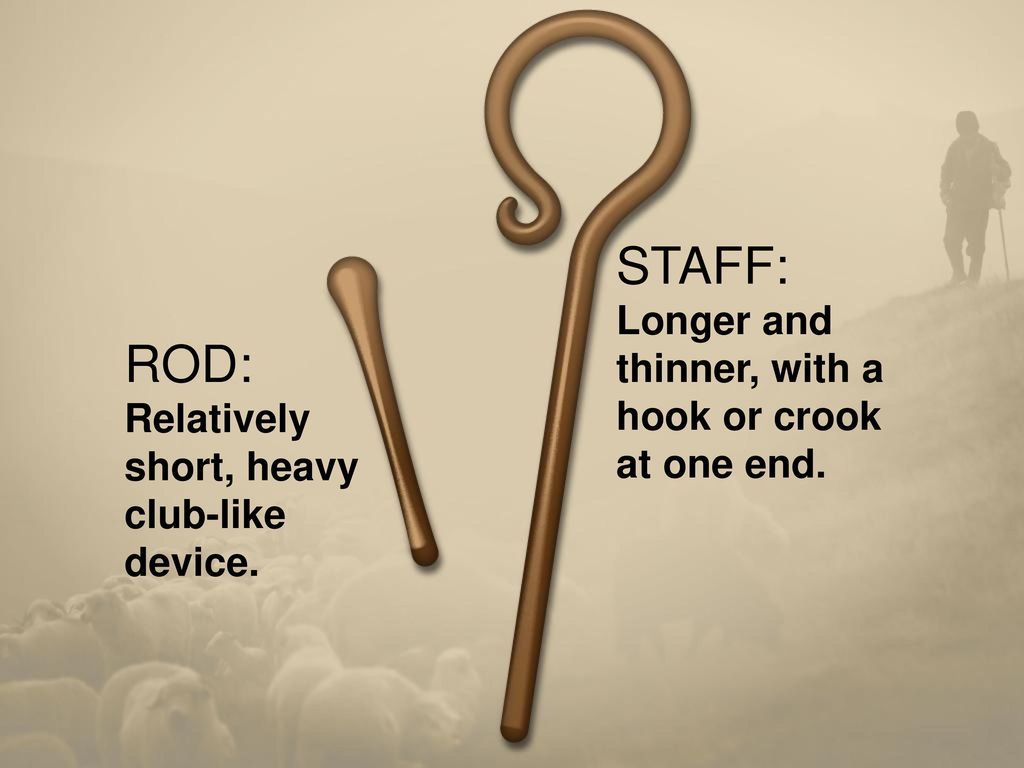
How are the Shepherd's Rod and Staff Different? » Reasons for Hope ...

In the time the scripture was written, and even still today, shepherds used tools to guide their sheep. They use a staff, a crook, and a rod. The crook is the curved stick you see most often in pictures with shepherds.

  • When sheep fall into a pit or lose sight of their flock, they look down. The curved end of the crook is used to pull the sheep’s head back up and guide it in the way it should go.
  • The rod is used to guide sheep who wandered off from the flock.  It can also be used defensively to keep the sheep safe from predators.

So read it again and think about your own children:

Whoever spares the rod hates their children,
but the one who loves their children is careful to discipline them.


I circled many and noticed some patterns of “groupings”-like heart, wealth, laziness…etc. were bunched in themes.  So many good ones today!  I will read it again and see which one is the one God highlighted for me.

Proverbs 10-12

As we begin we will see that a proverb is written in a short concise statement called a “maxim” that has a proven truth to it, a general rule, or a principle.

From chapters 10-22 we will read 375 maxims.  A short list compared to the 3,000 Solomon actually wrote according to 1 Kings 4:32.(Chapter 22-32 are sayings from the wise)

Most of the proverbs in this section are one verse long and contain two lines each. The second line contrasts, compares ,or completes the idea expressed in the first line. Sometimes the second line contrasts the first, and other times it merely just explains it.  I was studying with my daughter and her boyfriend and I explained it as a “Wisdom bumper sticker”.


So if you choose, I would LOVE for you to pick ONE from each chapter (3 total) that spoke to you in some way, and comment on them.  IF one confused you-ask.  Someone will research it for us.

It just hit my brain that IF we don’t reconnect next year, one thing that you could commit to is either:

  • One Proverb a day (for 31 days)

Or

  • 1 Maxim a day for 375 days.

😁

Proverbs 7-9

Today is the last day of the introduction.  God dedicated 9 chapters to explaining and describing Wisdom.  What it (she) is, how to obtain it, the benefits of wisdom as well as the warnings of not seeking wisdom.  After today’s read the ball is in your court.  These last 3 chapters are intense.  There are 2 women- one leads you down a well-lit straight path that leads to an abundant life.  The other leads you down a crooked path in the dark.  

In chapter 7 Solomon‘s words describe the other woman as crafty, defiant, and with persuasive words.  The world today could not have been portrayed more perfectly than Chapter 7. The chapter is concluded with a “Listen to me”.  I know when I say that at to kids, all eyes better be facing me!

Now then, my sons, listen to me;
    pay attention to what I say.
 Do not let your heart turn to her ways
    or stray into her paths.
Many are the victims she has brought down;
    her slain are a mighty throng.
 Her house is a highway to the grave,
    leading down to the chambers of death.

After reading that,  I was saddened as I was reminded of Matthew 7:

13 “Enter through the narrow gate. For wide is the gate and broad is the road that leads to destruction, and many enter through it. 14 But small is the gate and narrow the road that leads to life, and only a few find it.


Chapter 8 answers the question “Does God WANT you to have Wisdom”- YES.  Verse one says:

Does not wisdom call out?
    Does not understanding raise her voice?
2 At the highest point along the way,
    where the paths meet, she takes her stand;
beside the gate leading into the city,
    at the entrance, she cries aloud:
“To you, O people, I call out;
    I raise my voice to all mankind.
You who are simple, gain prudence;
    you who are foolish, set your hearts on it.[c]
Listen, for I have trustworthy things to say;
    I open my lips to speak what is right.

Wisdom is not a whisper!  She is right here calling out from the Bible.  You have been reading for 157 days (some crammed together as make-up days).  Let me ask you WHAT ELSE HAVE YOU DONE IN YOUR LIFE FOR 157 Days??  If you worked out for 157 you would be stronger.  If you dieted for 157 days there would be a change.  If you cleaned your house for 157 it would look different.  So, I ask you…has 157 days in the Word made a difference in you!!  I am going to answer for you: YES because you wouldn’t have still been reading. 

Chapter 8 Verse 17:

I love those who love me,
    and those who seek me find me.
18 With me are riches and honor,
    enduring wealth and prosperity.
19 My fruit is better than fine gold;
    what I yield surpasses choice silver.
20 I walk in the way of righteousness,
    along the paths of justice,
21 bestowing a rich inheritance on those who love me
    and making their treasuries full.


Finally chapter 9:  A reminder that Wisdom is calling out, but the woman of folly is loud and undisciplined.   As we start tomorrow reading the actual proverbs, take a deep breath and remember that these are to be applied, not just read.  They will be loud (but the other woman telling you not to apply them will be loud too.  YOU CHOOSE.  Dark/Light  Straight/Narrow.

How do we start: By being in AWE of GOD! Chapter 9:10:

The fear of the Lord is the beginning of wisdom,
    and knowledge of the Holy One is understanding.
For through wisdom your days will be many,
    and years will be added to your life.